 UKLakeDistrict
The Westmorland and Furness Way
The Westmorland and Furness Way is more than just a walking route; it is a 120-mile pilgrimage through the diverse geological and cultural history of Northern England. By connecting the high-altitude moorlands of the North Pennines with the coastal heritage of the Furness Peninsula, the trail creates a unique trans-Cumbrian experience.
Advertisement
Walk Description
The High Pennines & Eden Valley
Starting in Alston—England's highest market town—hikers ascend through a UNESCO Global Geopark. The route traverses the dramatic Great North Fault, offering views of the Lake District fells in the distance before descending into the pastoral tranquility of the Eden Valley. Here, sandstone villages and ancient stone circles provide a glimpse into the prehistoric significance of this landscape.
The Dales to the Lake District.
As you move south, the trail skirts the western edge of the Yorkshire Dales National Park. The crossing of the Howgill Fells is a highlight for many, offering big sky views without the crowds of the central Lakes. The transition into the Lake District National Park near Windermere introduces a world-class landscape of glacial lakes and rugged peaks that has inspired poets and artists for centuries.
Coastal Heritage & Furness Abbey.
The final leg of the journey shifts from fell to shore. Passing through the market town of Ulverston, hikers enter the Furness Peninsula. The trail concludes at the magnificent ruins of Furness Abbey, once one of the richest Cistercian monasteries in England. This coastal finish provides a powerful historical bookend to a journey that began in the wild northern heights.
The Pennine Roof
Starting at Alston, this stage tackles the rugged terrain of the North Pennines, featuring sweeping moorland vistas and bracing fell air.
Eden’s Garden
A descent into the lush valley of the River Eden. Walk through historic Milburn and Appleby, enjoying flatter terrain and riverside paths.
The Sleeping Elephants
Crossing the Westmorland Dales to Sedbergh. The Howgill fells offer unique, rounded silhouettes and iconic Cumbrian ridge walking.
The Lake District Link
A stunning transition from the rolling Dales into the heart of the UNESCO Lake District, arriving at the vibrant shores of Bowness-on-Windermere.
Low Furness Fells
Heading south through ancient woodland and traditional farmland toward the festival town of Ulverston.
The Abbey Trail
The final coastal push across the peninsula, culminating at the red sandstone arches of the historic Furness Abbey.
Route Essentials
- Navigation: This is a long-distance route; ensure you have updated OS maps and a reliable GPS device, as some sections in the higher fells can be remote.
- Footwear: Given the variety of terrain—from muddy valley floors to rocky ridges—sturdy, waterproof hiking boots are essential.
- Logistics: Plan your accommodation and water refills in advance, especially when traversing the quieter stretches between the main hubs.
Gallery
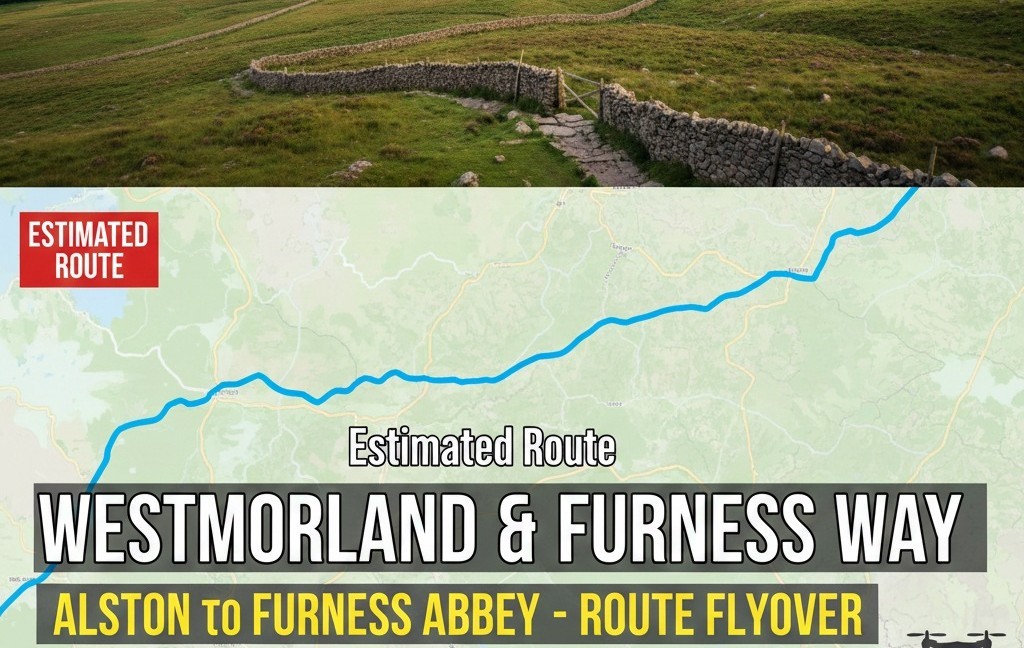
Route Map
Video Guide
Local Weather (yr.no)

Route Essentials
+ How long is the Westmorland and Furness Way?
The route spans approximately 79 miles (127 km) across the Westmorland and Furness region. It is typically completed over 6 days, though it can be broken into smaller sections depending on fitness levels.
+ What makes this walk unique?
Unlike many Lake District walks that focus solely on the high peaks, the Westmorland and Furness Way showcases the cultural and geological diversity of the area. It connects the 'working' landscapes of the coast and the 'wild' landscapes of the fells, offering a more complete picture of Cumbrian life.