Rydal Caves Walk — White Moss Circular Route Guide

Rydal Caves Walk — White Moss Circular Route Guide

Town Walk · Rydal · Cavern, Lake & Stepping Stones

Town Walk · Rydal · Cavern, Lake & Stepping Stones

The Rydal Caves walk from White Moss — an easy circular through woodland and along Rydal Water to a dramatic slate cavern with stepping stones. Free GPX, parking and tips.

Distance 5.1 km (3.1 miles)
Ascent 136 m
Time 2 – 2.5 hours
Difficulty Easy
Dog Friendly Yes

Walk Description

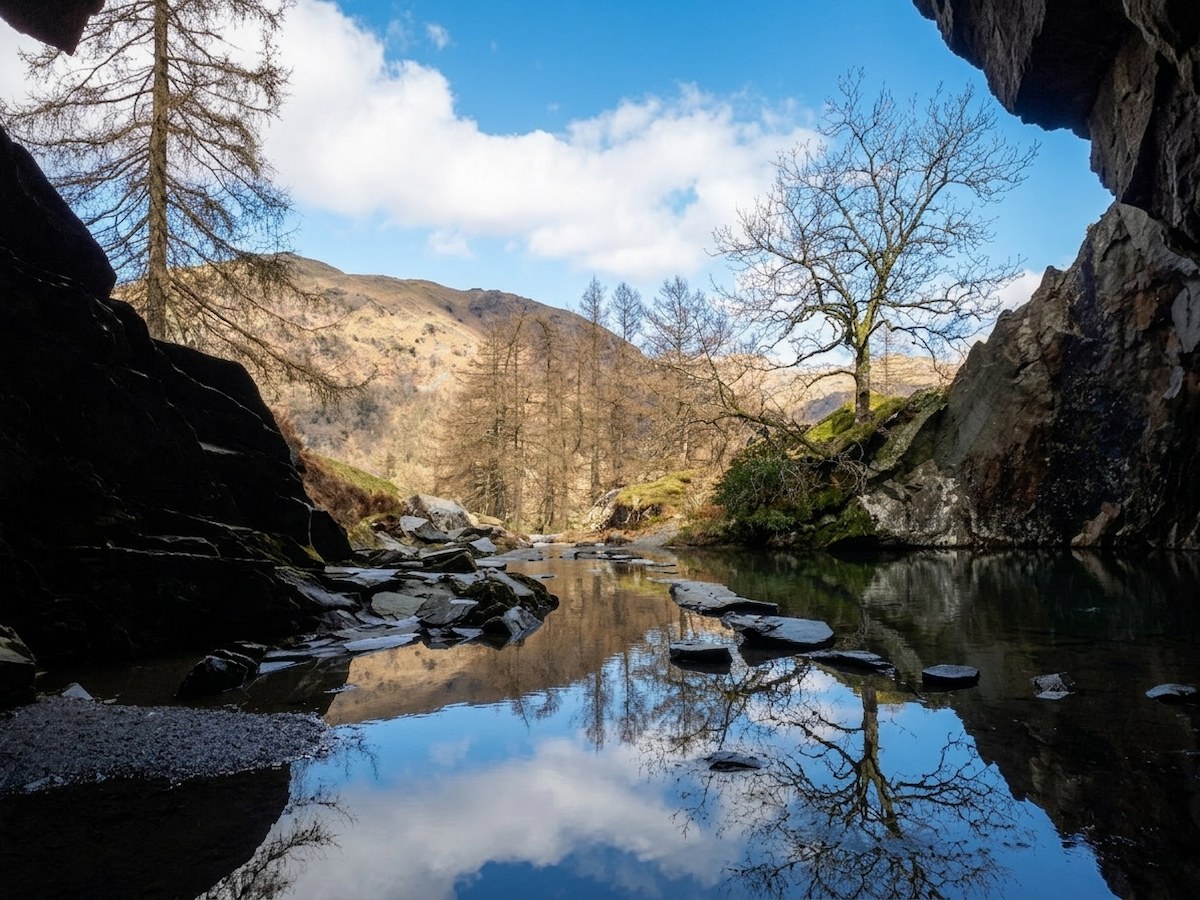
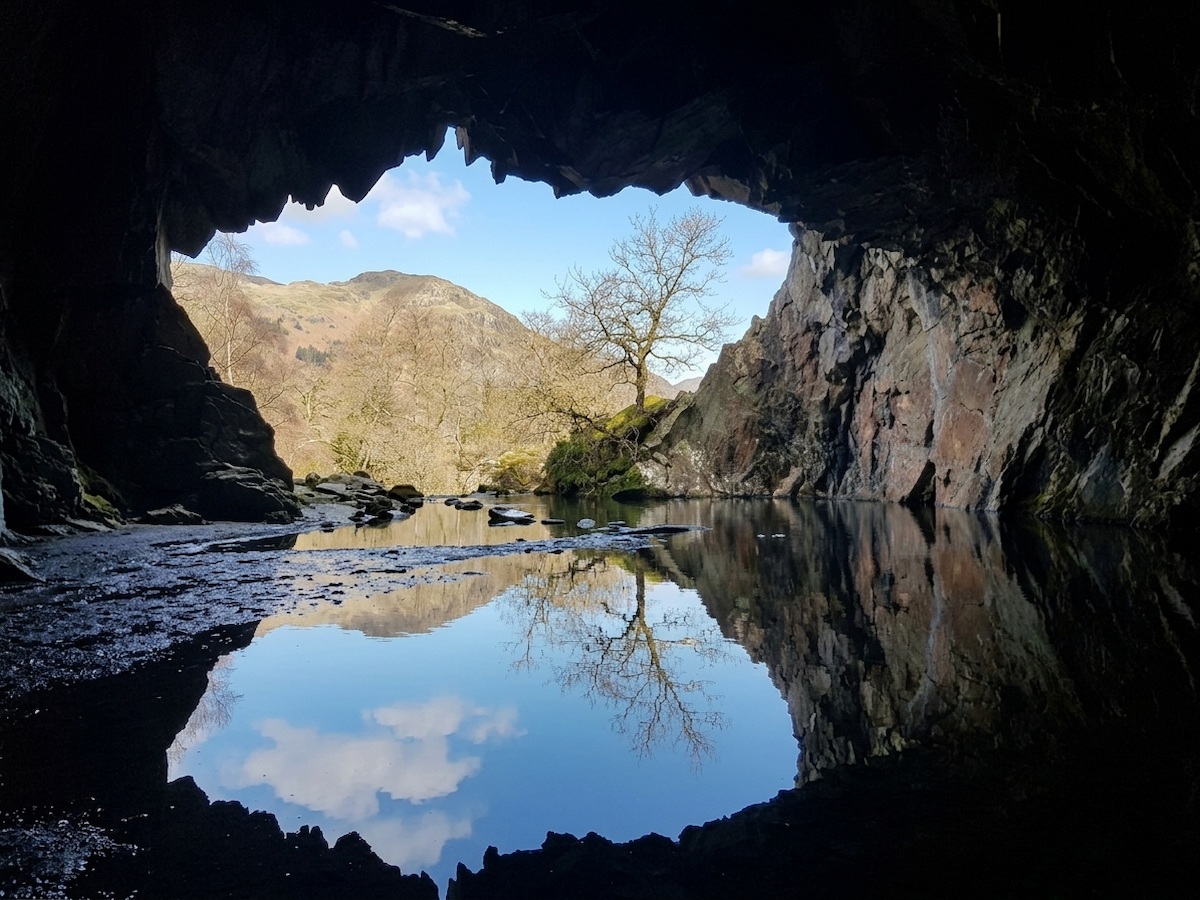
The Rydal Caves walk is one of the finest easy circulars in the Lake District — a short, family-friendly loop from White Moss that packs woodland, a shimmering lake and a genuinely spectacular slate cavern into a couple of gentle miles. Winding through White Moss woodland and along the shore of Rydal Water, the route leads to a vast man-made cave straight out of a fairy tale: a cathedral-like chamber with a still, reflective pool and famous stepping stones — used as a filming location for Netflix's The Witcher. This is classic Wordsworth country, with Rydal Mount, the poet's home for 37 years, barely half a mile away. Keep your eyes on the sky, too: the valley sits within military low-flying airspace, and RAF fast jets occasionally thunder through at rooftop height. Easy underfoot, endlessly rewarding and brilliant for children, the Rydal Caves circuit is the perfect introduction to the magic of the central Lakes.

Starting Point White Moss Car Park, near Ambleside (LA22 9SE)
Key Landmarks White Moss Woods, Rydal Water, Jobson Close Cave, Rydal Cave (Loughrigg Quarry), Loughrigg viewpoint
01

White Moss Woods & Rydal Water

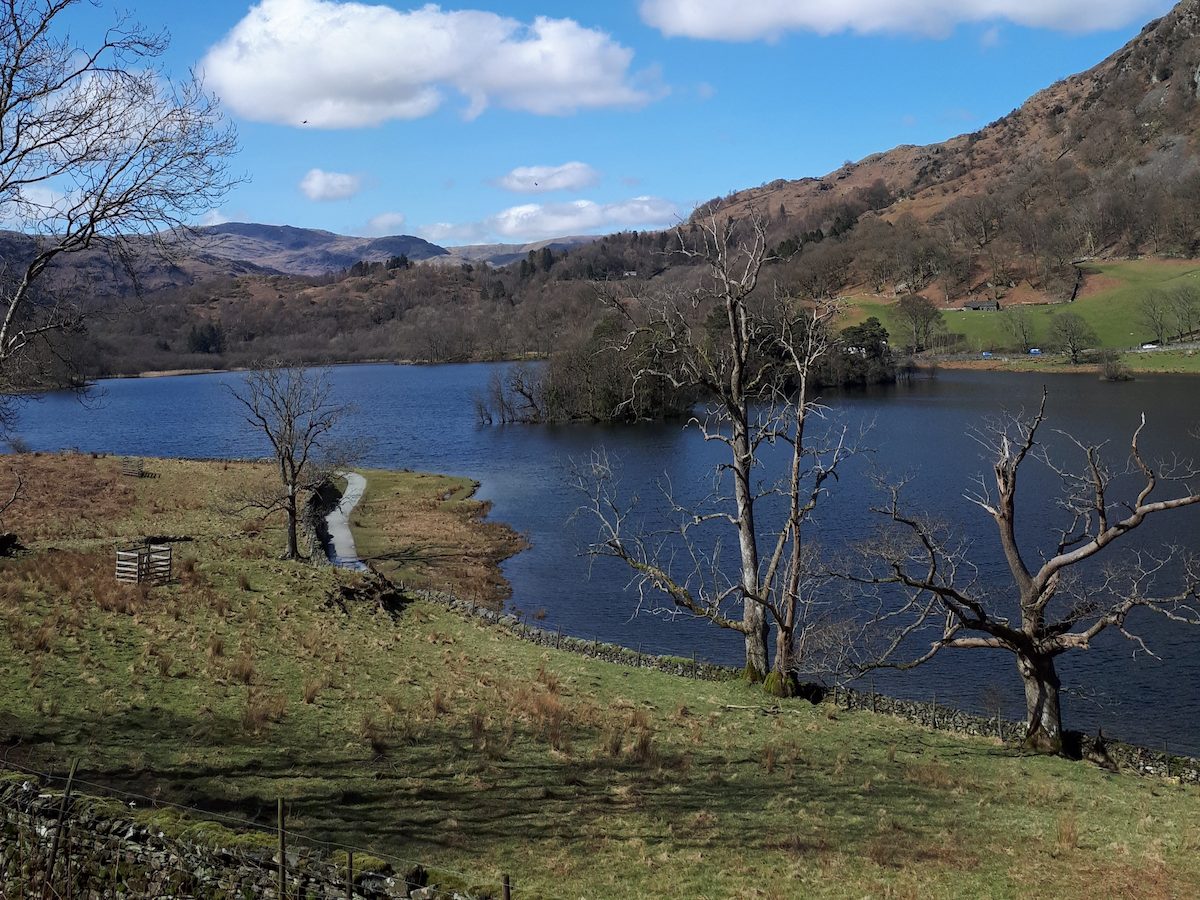
From White Moss Car Park — perfectly placed between Ambleside and Grasmere on the A591 — follow the path past the public toilets and cross the River Rothay on a broad footbridge into the cool shade of White Moss woodland. In spring the floor is carpeted with bluebells; in autumn the canopy turns gold overhead. The path climbs gently through the trees, the sound of Rydal Water audible below, before emerging onto open fellside with the lake spread out alongside you. The steep fell rising to the north is Nab Scar; the rounded height above the cave is Loughrigg Fell. This is Wordsworth's beloved landscape, and it's easy to see why it never let him go.

02

Jobson Close Cave & Rydal Cave

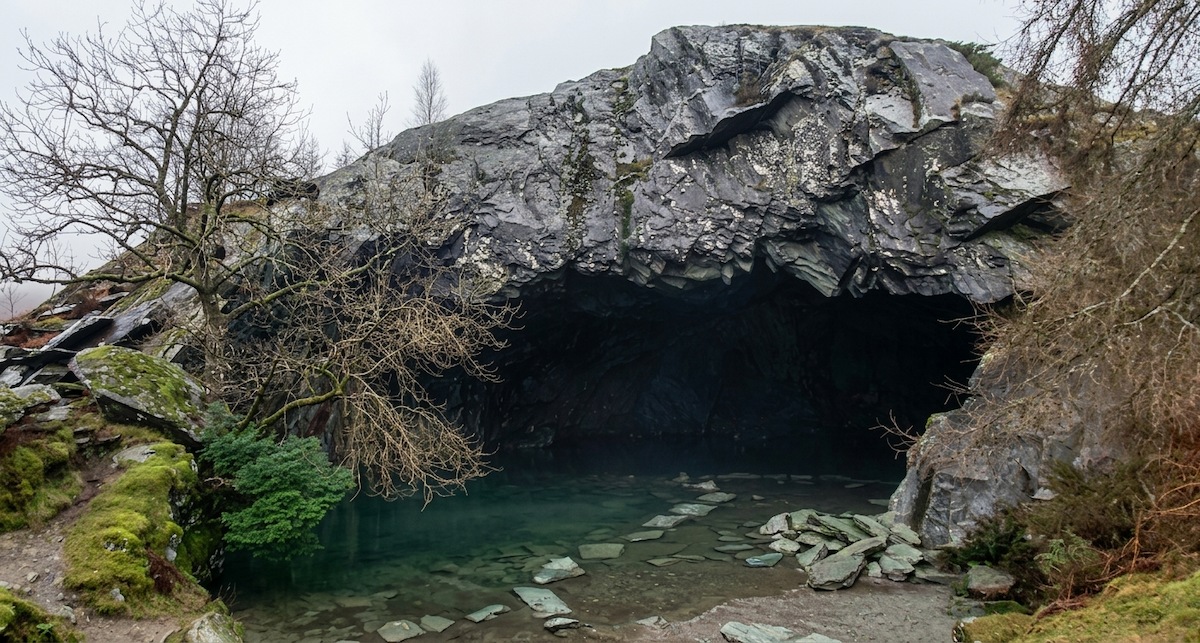
A signed path climbs away from the lakeshore and rounds the lower slopes of Loughrigg. Shortly before the main cave, look out for the smaller Jobson Close Cave on your left — many visitors mistake this for the main attraction and turn back, missing the real spectacle just around the corner, so keep going. Rydal Cave announces itself with an enormous dark opening: the gaping mouth of a former Victorian slate quarry, last worked in the late 19th century and since reclaimed by nature. Inside, the cavern opens into a wide, cathedral-like chamber with a still pool on the old quarry floor. Stepping stones lead across the shallows — bring a torch to see the full extent of the space.

03

The Cave, the Views & the Witcher Connection

From directly above the cave entrance, a short scramble rewards you with an elevated view across Rydal Water towards Grasmere and the surrounding fells — one of the finest short viewpoints in the area, and well worth the extra few minutes. Film fans will recognise the cave's stepping stones from Netflix's The Witcher, which featured here in Season 2 (Episode 7, 'Voleth Meir'), the production team drawn by its otherworldly atmosphere. The pool's depth varies dramatically with rainfall; on a bright day the water throws shifting patterns of light onto the rock walls. It's a magical, echoing place — the highlight of the walk and a guaranteed hit with children.

04

The Return via the Lakeshore

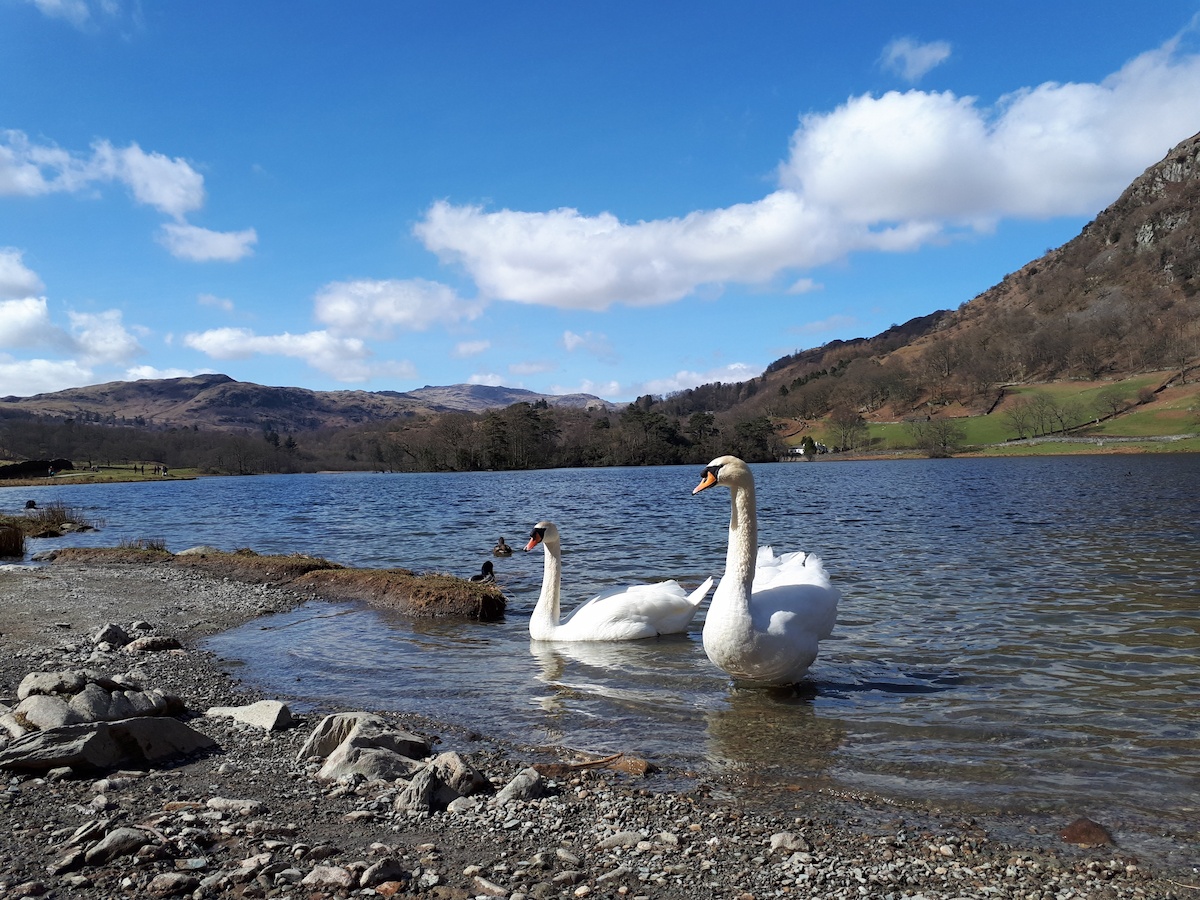
Retrace the upper path back to the lakeshore junction, then bear right to follow the lower path along the shore of Rydal Water, with plenty of spots to stop for a picnic or let children paddle at the water's edge. On the return, keep your ears as well as your eyes open: the Rydal and Grasmere valleys sit within Low Flying Area 17 (LFA17), a military training zone, and RAF jets — Typhoons, F-35 Lightnings and transport aircraft — occasionally thunder through at very low level along the valley floor. The path continues easily through the woodland back to White Moss Car Park, completing a short but wonderfully varied circular.

Route Essentials

  • Don't stop at the first cave: Jobson Close Cave appears before the main attraction — keep walking another few minutes to reach the spectacular main Rydal Cave.
  • Bring a torch: use a torch or phone light inside the cave — the interior pool can be several metres deep after heavy rain, and the stepping stones can be submerged. The rocks to the right of the entrance offer an alternative dry access route.
  • Parking: White Moss Car Park (LA22 9SE) is camera-controlled pay-and-display — check your ticket carefully and buy extra time if you'll linger. It fills quickly in peak season; arriving before 9am or after 4pm helps with both space and charges. The smaller Pelter Bridge car park near Rydal is an alternative.
  • Watch the skies: this is LFA17 military low-flying airspace — RAF jets periodically follow the valley floor at very low level. Weekday mornings on clear days offer the best chance of a sighting.
  • Wordsworth country: Rydal Mount, Wordsworth's home for the last decades of his life, is a short walk or drive from the car park and well worth combining with this route.
  • Terrain: woodland paths and open fell tracks with short rocky sections near the cave and some light scrambling over loose scree at the entrance. Good underfoot but muddy in the woods after rain — trainers are fine in dry spells, boots better when wet.
  • Safety Notice: The GPX file and route information on this page are for general guidance only. Always carry an OS map and compass, check the weather forecast, and tell someone your plans before setting out. You walk at your own risk.

The Rydal Caves walk at a glance

The Rydal Caves walk from White Moss is, for many visitors, the single most rewarding short walk in the central Lake District. In little more than three miles it delivers a river crossing, a bluebell woodland, the shimmering shoreline of Rydal Water, and a cavern so cinematic it doubled as a filming location for Netflix's The Witcher. It is short enough for young children and first-time fell walkers, yet varied enough that seasoned Lakeland regulars return to it again and again.

Sitting neatly between Ambleside and Grasmere on the A591, the walk is one of the easiest "big scenery" days you can plan in the National Park. There are no serious gradients, no exposure and no route-finding puzzles — just a gentle, well-trodden loop through some of William Wordsworth's most beloved country. Below you'll find everything you need to turn this classic circular into a smooth, memorable outing: how to get here, where to park, the history behind the cave, and how to extend the day into a full Lakeland adventure.

Getting to White Moss: parking, buses and directions

By car, the walk starts from White Moss Car Park (postcode LA22 9SE), directly on the A591 roughly halfway between Ambleside and Grasmere. There are car parks on both sides of the road, linked by a signed footpath, and both are pay-and-display with camera (ANPR) enforcement — buy enough time and keep an eye on the clock, because the charges catch a lot of visitors out. In peak season the car parks fill by mid-morning, so aim to arrive before 9am or after 4pm. If both are full, the smaller Pelter Bridge car park near Rydal village gives a slightly different, marginally shorter approach to the cave.

By bus, the walk is genuinely car-free friendly. The 555 and 599 (open-top) Stagecoach services run frequently along the A591 between Windermere, Ambleside, Rydal and Grasmere, stopping close to White Moss. Leaving the car behind removes all the parking stress and lets you finish the day in Grasmere or Ambleside rather than doubling back — a real bonus on a warm summer weekend.

From the car park the route is well signed: cross the River Rothay on the footbridge, climb gently through White Moss woodland, and follow the clear path along the northern shore of Rydal Water towards the unmistakable dark mouth of the cave.

The story of Rydal Cave: from Victorian slate quarry to Witcher film set

Despite its cathedral-like grandeur, Rydal Cave is entirely man-made. It began life as Loughrigg Quarry, worked through the 18th and 19th centuries for the green Lakeland slate that roofs and walls so many local buildings. When quarrying ceased in the late 1800s, the excavated chamber was slowly reclaimed by nature: a shallow pool gathered on the old workings' floor, ferns and mosses colonised the walls, and the stepping stones that quarrymen once used became the photogenic threshold visitors cross today.

The cave's most famous modern moment came when Netflix's The Witcher filmed here for Season 2 (Episode 7, "Voleth Meir"), the production drawn by the cavern's otherworldly, echoing atmosphere. It is far from the only screen credit for this corner of Cumbria, but it is the one that sends a steady stream of fans up the path each week. Bring a torch: the interior is larger than it first appears, and after heavy rain the pool can be several metres deep, submerging the stepping stones and turning the whole chamber into a glassy mirror.

Wordsworth's Rydal: poetry, Rydal Mount and Dora's Field

This is the heart of Wordsworth country. The poet lived at Rydal Mount, just half a mile from the car park, for the last 37 years of his life, and the house and its hillside gardens are open to visitors for much of the year. Immediately below it lies Dora's Field, which Wordsworth planted with daffodils in memory of his daughter — a blaze of gold each spring that draws admirers of "I Wandered Lonely as a Cloud" from around the world.

Combining the Rydal Caves walk with a visit to Rydal Mount, or continuing to Grasmere to see Dove Cottage and the poet's grave in St Oswald's churchyard, turns a short morning stroll into a proper literary pilgrimage. Few walks in England pack this much cultural history into so gentle a loop.

Low-flying jets over Rydal: LFA17 explained

One quirk of walking here surprises first-timers. The Rydal and Grasmere valleys sit within Low Flying Area 17 (LFA17), part of the RAF's UK-wide low-flying training network. On a clear weekday you may witness fast jets — Typhoons, F-35 Lightnings and transport aircraft — thundering along the valley floor at rooftop height, following the natural corridor of the fells. It is a spectacular, wholly unpredictable sight, and the contrast between the ancient stillness of the lake and a jet screaming past is one many walkers never forget. Clear mornings from Monday to Friday offer the best odds; weekends and poor weather see little activity.

Extending your walk: Rydal Water, Grasmere and Loughrigg Fell

The beauty of this loop is how easily it grows. For a longer day, continue west from the cave to complete the full Rydal Water and Grasmere circuit, taking in both lakes on a figure-of-eight of around six miles. For bigger views, a short but steeper pull leads to the summit of Loughrigg Fell (335m), one of the finest low-level viewpoints in the district, looking down over both lakes towards the Fairfield Horseshoe.

Keen baggers can push on to link this walk with the higher fells above Rydal, while families will find the plain lakeshore return more than enough. If you enjoy this kind of easy-but-spectacular outing, our Gummer's How walk above Windermere is a natural next choice, and the wider Wainwright fells collection lays out routes for when you're ready to climb higher.

Where to eat, drink and stay near Rydal

There are no facilities on the walk itself, so plan your refreshment around the start and finish. Ambleside, two minutes' drive south, has the widest choice of cafés, pubs, outdoor shops and accommodation in the area. Grasmere, just north, is famous for its gingerbread shop — the scent hits you before you reach the door — plus tearooms, inns and the peaceful churchyard. Closer still, the Badger Bar at Rydal and the tearoom at Rydal Hall make convenient stops a short stroll from the car park.

For an overnight base, Ambleside and Grasmere between them offer everything from campsites and youth hostels to country-house hotels, putting dozens of other classic walks — the caves, the lakes and the surrounding fells — within easy reach.

Rydal Caves walk: final tips for a perfect day

Come prepared for a short walk with a big payoff. Wear proper footwear — the woodland turns muddy after rain and the scree at the cave mouth is loose — and pack a torch so you can appreciate the full scale of the cavern. Keep children close on the stepping stones, which are slippery and edged by deep water, and bring spare socks because paddling in Rydal Water is almost inevitable on a warm day.

Above all, give yourself time to linger. This is a walk to savour rather than rush: a picnic on the shingle shore, a scramble to the viewpoint above the cave, and a slow woodland return with an ear cocked for jets overhead. Do that, and you'll understand exactly why the Rydal Caves circular remains one of the best-loved short walks in the whole of the Lake District.

Route Map

Distance
-- km
Ascent
-- m
Difficulty Easy

What to Bring

  • Comfortable walking shoes or boots
  • Waterproof jacket and a warm layer
  • A torch or head torch for the cave
  • Water and a picnic for the lakeshore
  • OS Explorer OL7 map
  • Phone with the OS Maps app
  • Camera for the cave and lake reflections
  • Spare socks for children (paddling is likely!)
  • Dog lead for the grazed sections
  • Sun protection on clear days

Best Time to Visit

Rydal Caves is a rewarding walk in every season. Spring paints White Moss woodland with bluebells and fresh green; autumn brings spectacular gold reflections on Rydal Water and quieter paths. Summer is busiest, so arrive early or late in the day for easier parking and a more peaceful cave. Winter offers dramatic low light and the fullest, deepest cave pool after rain. Clear weekday mornings not only give the best light but also the best chance of catching an RAF jet screaming through the valley — a memorable Lake District moment.

Local Weather (yr.no)

Three-day weather forecast for Rydal Caves Walk — White Moss Circular Route Guide

Forecast provided by yr.no

Safety Information

Important: The GPX file and route description on this page are for general guidance only and should not be relied upon as a sole means of navigation. GPX tracks are approximate and may not reflect current ground conditions, path diversions, or seasonal changes.

Always carry an Ordnance Survey map and a compass, and know how to use them. Check the weather forecast before setting out, tell someone your planned route and expected return time, and wear appropriate footwear and clothing for the conditions.

UKLakeDistrict.com accepts no responsibility for any loss, injury, or damage arising from the use of route information or GPX files provided on this site. You walk entirely at your own risk.

Route Essentials

Frequently Asked Questions

How long does the walk from White Moss to Rydal Caves take?

Most walkers reach the cave in around 30 minutes from White Moss Car Park, and the full circular via Rydal Water takes 2 to 2.5 hours at a relaxed pace — covering about 5.1 km (3.1 miles) with a gentle 136 m of ascent. That includes time to explore the cave interior and climb to the viewpoint above. It's an easy half-day that suits families perfectly.

Is the Rydal Caves walk suitable for families and young children?

Yes — it's one of the best family walks near Ambleside. The paths are well-made and the distance is short, and the cave itself, with its stepping stones and echoing interior, is a huge hit with children. Note that the rocky section approaching the cave requires some careful footing for very young ones, and the stepping stones can be slippery, so keep little ones close inside the cavern.

Where do you park for the Rydal Caves walk?

The best option is White Moss Car Park (LA22 9SE), a pay-and-display car park on the A591 between Ambleside and Grasmere, where the walk begins. It's camera-controlled, so check your ticket carefully and pay for enough time. The smaller Pelter Bridge car park near Rydal village offers a slightly shorter approach but fills very quickly.

Was Rydal Cave really used in The Witcher?

Yes — Rydal Cave featured as a filming location in Season 2 of Netflix's The Witcher, appearing in Episode 7, 'Voleth Meir'. The iconic stepping stones leading into the cave are clearly visible in the scene. The production filmed at several Lake District locations that season, drawn by the area's dramatic, atmospheric landscapes — and Rydal Cave's cathedral-like interior is among the most striking.

Can you see fast jets from the Rydal Caves walk?

Possibly! The Rydal and Grasmere valleys fall within LFA17 (Low Flying Area 17), a designated military low-flying training zone. RAF aircraft — including Typhoons and F-35 Lightnings — periodically follow the valley floor at very low level. Sightings are unpredictable but most likely on clear weekday mornings. The contrast between the ancient stillness of the lake and a sudden fast jet overhead is unforgettable.

Is the Rydal Cave man-made or natural?

Rydal Cave is man-made — it's a former slate quarry, known as Loughrigg Quarry, worked through the Victorian era until the late 19th century and since reclaimed by nature. What looks like a natural cavern is actually the excavated chamber left by quarrymen, now flooded with a shallow pool. Its scale and the reflective water make it feel far older and more magical than its industrial origins suggest.

Is the Rydal Caves walk dog friendly?

Yes, it's a popular and welcoming walk for dogs, with lakeshore paddling spots they'll love. Keep dogs under close control or on a lead around the grazing sheep on the open fellside and near the busy car park and road at the start. Inside the cave, watch for slippery stepping stones and deep water after rain. Bring water for your dog on warm days.

Can I combine Rydal Caves with other walks or sights?

Absolutely. The route links easily onto the wider Rydal Water and Grasmere circuit for a longer day, or up onto Loughrigg Fell for bigger views. Nearby, Rydal Mount (Wordsworth's home) and Dora's Field, famous for its spring daffodils, are well worth visiting. Grasmere village, with its gingerbread shop and Wordsworth connections, is just up the road for a full day out.