Stanley Ghyll Force Walk — Eskdale Waterfall & Gorge Guide
Waterfall Walk · Eskdale · 60ft Gorge Fall
The Stanley Ghyll Force walk from Dalegarth Station — through a rhododendron gorge to a 60ft waterfall and its cantilevered viewing platform. Free GPX, parking and tips.
Walk Description
Stanley Ghyll Force is one of the Lake District's most dramatic and least-expected waterfalls — a slender 60-foot cascade plunging into a deep, secret gorge draped in rhododendron and dripping ferns, hidden away in the quiet western valley of Eskdale. This walk reaches it from the terminus of the famous Ravenglass & Eskdale Railway, the miniature steam line affectionately known as 'La'al Ratty', making a wonderful day out that blends heritage travel with a genuine sense of adventure. From Dalegarth the route crosses the River Esk and climbs into the ancient oak woodland of Stanley Ghyll before threading up the increasingly narrow, atmospheric ravine. The finale is a spectacular cantilevered steel viewing platform that juts out over the gorge to give a thrilling, face-on view of the falls thundering below. Rugged, romantic and quite unlike the district's busier honeypots, Stanley Ghyll rewards a little effort with one of the most memorable waterfall spectacles in Cumbria.
Dalegarth Station to the River Esk
Begin at Dalegarth for Boot station, the end of the line for the Ravenglass & Eskdale Railway. Turn out of the station and follow the quiet lane south, soon crossing the River Esk by the road bridge or the nearby footbridge at Trough House Bridge. This opening section is easy and level, giving lovely views up and down the Esk valley with the western fells rising all around. Follow the signs and the well-marked path towards Stanley Ghyll Woods, entering the trees through a gate — the gentle warm-up before the ground begins to steepen and the gorge closes in.
Into Stanley Ghyll Woods
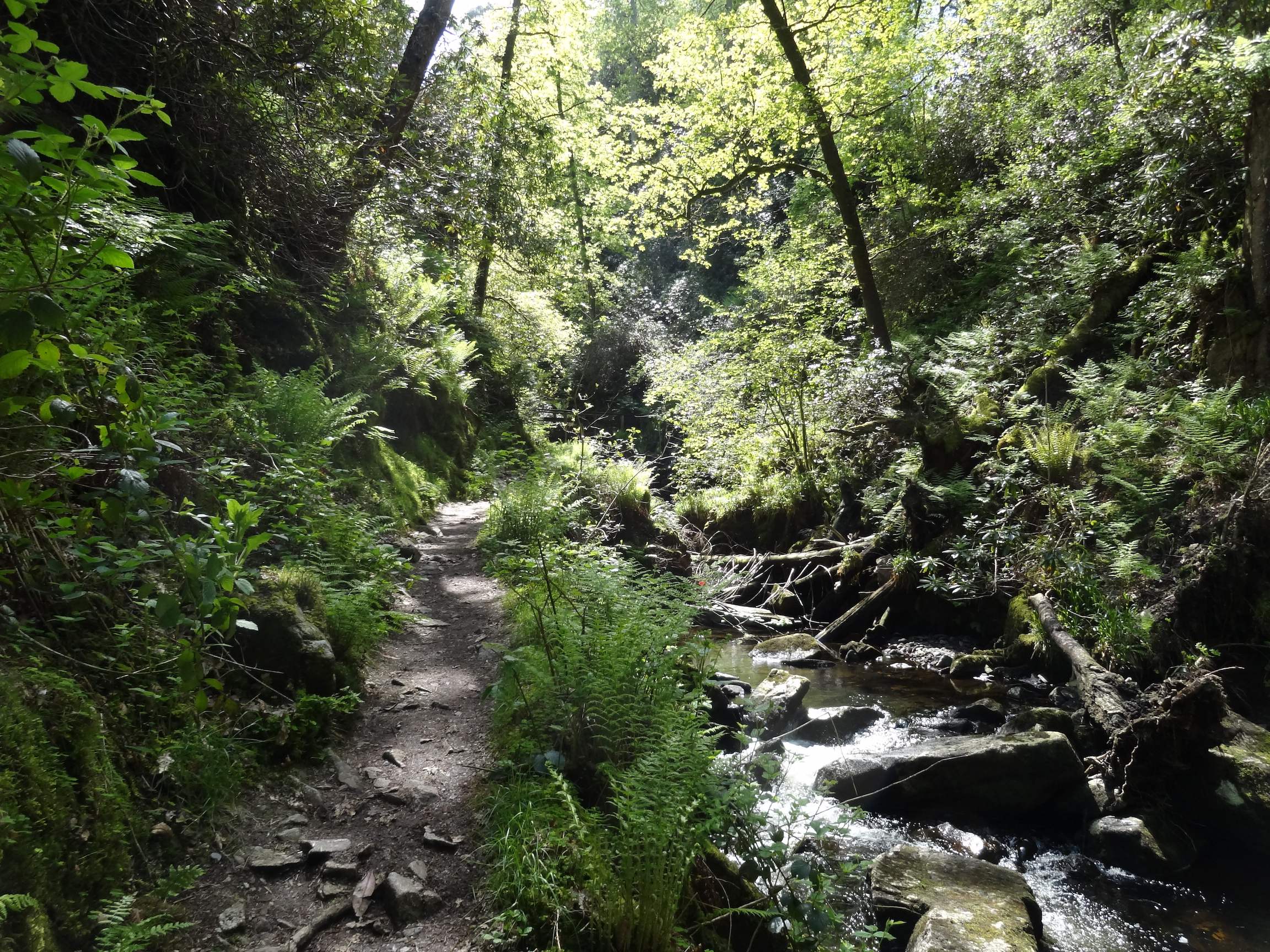
The path climbs into a stunning stretch of ancient oak woodland, part of the Atlantic temperate rainforest that clings to these damp western valleys. Mosses, liverworts and ferns coat every rock and branch, and in early summer the gorge is lit by the pink blaze of rhododendron — beautiful, though an invasive species the estate carefully manages. The trail follows the beck upstream, crossing it on small footbridges as the valley narrows. The terrain becomes noticeably more rugged here, with rocky steps and roots underfoot: stay strictly to the marked path, because the gorge edges are steep, unfenced and can be treacherous.
The Gorge & Viewing Platform
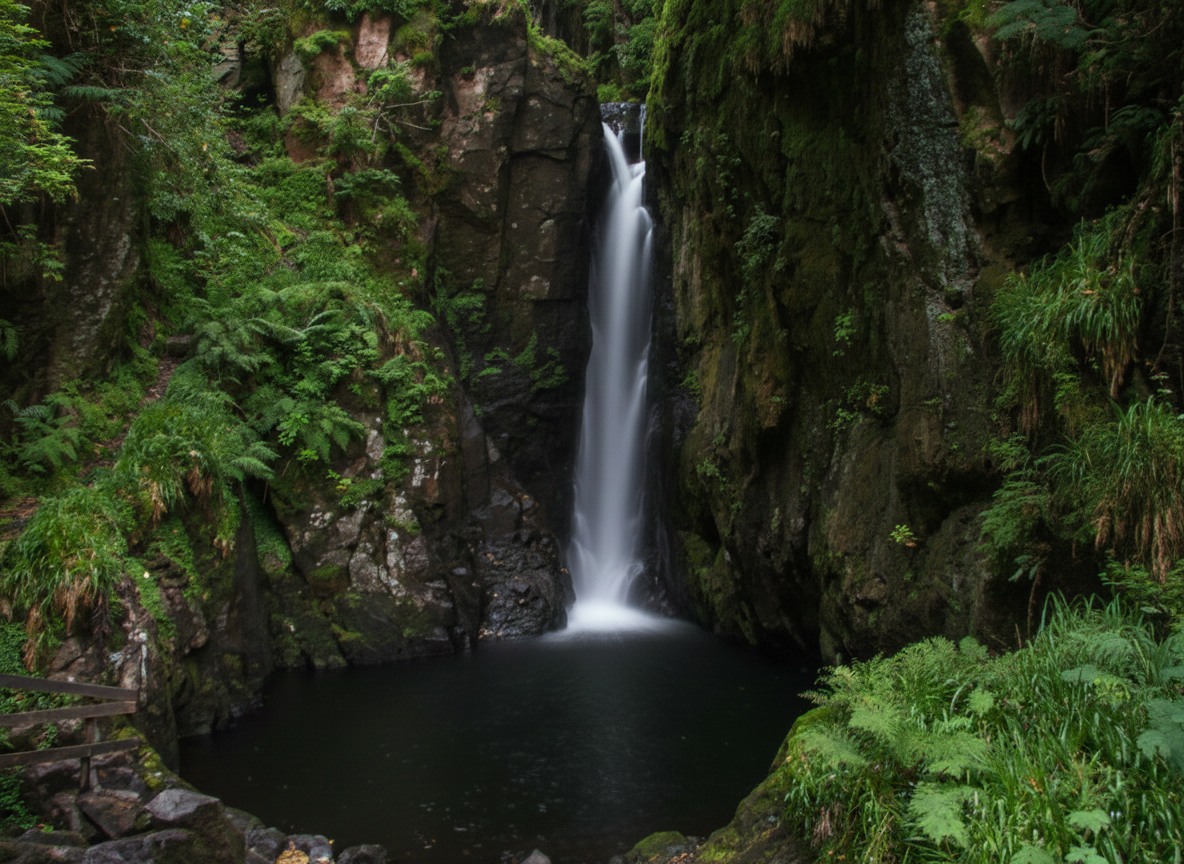
As the ravine tightens, the roar of water builds ahead. The path leads to the walk's highlight: a modern cantilevered steel viewing platform that projects out over the chasm, engineered to give a safe, spectacular, face-on view of Stanley Ghyll Force as it drops around 60 feet into the dark plunge pool below. It's a genuinely dramatic spot — the fall framed by soaring, fern-hung rock walls, spray drifting up the gorge. Take your time and your photos here. The lower gorge scramble that older guides describe is no longer the recommended route; the platform is the safe way to see the falls.
The Return & the High Woodland Loop
From the platform you can simply retrace your steps back down through the woods to the river and the station — the most straightforward option. For a little more, energetic walkers can take the higher woodland tracks that climb above the gorge to reach open viewpoints looking out over Eskdale to the Scafell range, before looping back down to Dalegarth. However you return, keep an eye on the time so you're back at the station in good time for La'al Ratty's last steam train of the day — a charming, unhurried finish to the walk.
Route Essentials
- This is a moderate-to-difficult walk: despite the short distance, the gorge section is steep, rocky and notoriously slippery. Sturdy hiking boots with good grip are essential, and it's not suitable for pushchairs.
- Stay on the marked path: the gorge edges are steep and unfenced, and the ground is home to rare mosses and ferns. Do not attempt to scramble down to the water's edge or the base of the falls.
- Parking: park at the Dalegarth Station car park (CA19 1TG) at the railway, or the small National Trust car park just past Trough House Bridge. Both are modest in size and busy in summer.
- Ride 'La'al Ratty': for the full experience, arrive by the Ravenglass & Eskdale Railway. Check the timetable and give yourself plenty of time to explore before the last train leaves Dalegarth.
- Facilities: there are toilets and the Fellbites Café at Dalegarth Station. The nearby village of Boot has two excellent pubs — the Boot Inn and the Brook House Inn — for a well-earned meal afterwards.
- Best after rain: the falls are at their thundering best a day or two after heavy rain; in a dry spell the flow can drop considerably.
- Safety Notice: The GPX file and route information on this page are for general guidance only. Always carry an OS map and compass, check the weather forecast, and tell someone your plans before setting out. You walk at your own risk.
The Stanley Ghyll Force walk at a glance
Stanley Ghyll Force is one of the Lake District's most dramatic and least-expected waterfalls — a slender 60-foot (18-metre) cascade plunging into a deep, secret gorge draped in rhododendron and dripping ferns, hidden away in the quiet western valley of Eskdale. What makes this walk special is the setting: a tightening, rainforest-clad ravine that feels far more like a Himalayan foothill than an English fell, climaxing at a cantilevered steel viewing platform that juts out over the chasm for a thrilling, face-on view of the falls.
Better still, the walk begins at the terminus of the famous Ravenglass & Eskdale Railway — the miniature steam line affectionately known as 'La'al Ratty' — so the whole day can blend heritage travel with genuine adventure. At around 3.6 km (2.2 miles) it's short, but the steep, slippery gorge terrain earns its moderate-to-difficult grade. This is a walk to savour slowly, not rush, and one of the most memorable waterfall spectacles in Cumbria.
Getting to Eskdale and Dalegarth: the scenic approach
By car, the walk starts from Dalegarth for Boot station (postcode CA19 1TG), reached via the dramatic mountain passes of Hardknott and Wrynose from the central Lakes, or more gently along the coast road via Ravenglass. Be warned: the Hardknott Pass is one of England's steepest and most demanding roads, thrilling but not for nervous drivers or in poor conditions. There's a car park at Dalegarth Station, plus a small National Trust car park just past Trough House Bridge — both are modest and busy in summer.
By steam railway, however, is the classic way to arrive. The Ravenglass & Eskdale Railway runs seven miles up the valley from the coast at Ravenglass, connecting with the mainline railway, and delivers you right to the start of the walk in wonderfully unhurried style. Riding 'La'al Ratty' removes the stress of the mountain passes entirely and turns the outing into a proper day of Lakeland heritage. Check the timetable in advance and allow time to explore the gorge before the last train home.
Into the gorge: temperate rainforest and rhododendron
From Dalegarth the route crosses the River Esk and climbs into the ancient oak woodland of Stanley Ghyll, part of the Atlantic temperate rainforest that clings to these damp western valleys. Mosses, liverworts and ferns coat every rock and branch, thriving in the high rainfall and clean western air. In early summer the gorge is lit by the pink blaze of rhododendron — undeniably beautiful, though an invasive non-native species that the estate and the National Trust carefully manage to protect the rare native plants beneath.
As the ravine tightens, the terrain becomes noticeably more rugged, with rocky steps and roots underfoot and the roar of water building ahead. It is essential to stay strictly on the marked path here: the gorge edges are steep, unfenced and genuinely dangerous, and the ground is home to fragile, rare vegetation.
The viewing platform and the falls
The path's climax is the modern cantilevered steel viewing platform, engineered to project safely out over the chasm and give a spectacular, face-on view of Stanley Ghyll Force dropping around 60 feet into its dark plunge pool. Framed by soaring, fern-hung rock walls with spray drifting up the gorge, it is a genuinely theatrical spot and the reason the walk has become a growing favourite.
Older guidebooks describe a lower gorge scramble, crossing the beck to reach the very foot of the falls — this is no longer the recommended route. It was steep, dangerous and prone to serious accidents, and the platform now offers the safe way to see the falls at their best. For your safety and to protect the gorge's rare plants, resist any temptation to leave the path.
La'al Ratty: the Ravenglass & Eskdale Railway
The Ravenglass & Eskdale Railway deserves a paragraph of its own. Originally built in 1875 to carry iron ore (and later granite) down the valley to the coast, this narrow-gauge line was saved by enthusiasts and now runs as one of England's best-loved heritage steam railways. Its little locomotives haul open and enclosed carriages through seven miles of glorious Eskdale scenery, and dogs are welcome aboard (check current policy and any small fee).
Combining the train with the waterfall walk makes for a wonderful family day out: the anticipation of the steam journey, the adventure of the gorge, and the reward of a café or pub at the end. It's the kind of Lakeland day that children remember for years.
Nearby: Boot village, Eskdale Mill and more waterfalls
The walk sits at the heart of one of the Lake District's quietest and most rewarding valleys. The nearby village of Boot is a gem, home to two excellent traditional pubs — the Boot Inn and the Brook House Inn — and the historic Eskdale Mill, a working water-powered corn mill dating back to the 16th century. Dalegarth Station itself has toilets and the welcoming Fellbites Café.
Eskdale rewards further exploration, from the emerald pools of Tongue Pot in the upper valley to the surrounding western fells. If waterfalls are your passion, our full Lake District waterfall walks guide gathers the district's finest cascades, including the tallest of them all at our Scale Force walk near Buttermere, the hidden-gem Whorneyside Force in Great Langdale, and the ever-popular Aira Force and Gowbarrow circular on Ullswater.
Stanley Ghyll Force walk: final tips for a safe day
Come properly equipped for a short but serious little walk. Sturdy waterproof boots with good grip are non-negotiable — the gorge is steep, rocky and permanently slippery from spray. Pack a warm layer, because the shady ravine stays cool even on a hot day, and a wide-lens camera if you want to capture the enclosed falls. The walk is not suitable for pushchairs or for very unsteady walkers.
Time your visit for a day or two after rain to see the falls in full spate, keep dogs on a lead near the unfenced edges, and plan your return around La'al Ratty's last train if you've come by rail. Do all that, and Stanley Ghyll Force will reward you with one of the most surprising and dramatic waterfall experiences the Lake District has to offer.
Gallery
Route Map
Video Guide
What to Bring
- Sturdy waterproof boots with good grip
- Waterproof jacket (gorge spray and quick weather)
- OS Explorer OL6 map
- Phone with the OS Maps app
- Water and snacks
- Camera (a wide lens suits the gorge)
- Dog lead (steep, unfenced gorge edges)
- Cash or card for the railway and café
- A warm layer — the gorge is shady and cool
- Small first-aid kit
Best Time to Visit
Stanley Ghyll is at its most spectacular a day or two after heavy rain, when the falls are in full spate — so the wetter months of autumn, winter and early spring often show it at its best. Late spring brings the added drama of the rhododendron in flower through the gorge, a striking (if controversial) sight. Summer is the easiest time for the paths and for catching the railway, but the flow can be modest in a dry spell. Whatever the season, the gorge is shady, damp and slippery underfoot, so tread carefully and pick a day with a reasonable forecast.
Local Weather (yr.no)
Forecast provided by yr.no
Safety Information
Important: The GPX file and route description on this page are for general guidance only and should not be relied upon as a sole means of navigation. GPX tracks are approximate and may not reflect current ground conditions, path diversions, or seasonal changes.
Always carry an Ordnance Survey map and a compass, and know how to use them. Check the weather forecast before setting out, tell someone your planned route and expected return time, and wear appropriate footwear and clothing for the conditions.
UKLakeDistrict.com accepts no responsibility for any loss, injury, or damage arising from the use of route information or GPX files provided on this site. You walk entirely at your own risk.
Route Essentials
Frequently Asked Questions
Where do you park for Stanley Ghyll Force?
The best parking is the Dalegarth Station car park (CA19 1TG) at the Ravenglass & Eskdale Railway, or the small National Trust car park just past Trough House Bridge. From either it's a scenic walk of around 30 minutes into the gorge to reach the falls and the cantilevered viewing platform. Both car parks are small and get busy in peak season, so arrive early.
How hard is the walk to Stanley Ghyll Force?
It's rated moderate to difficult despite being short (about 3.6 km / 2.2 miles with 153 m of ascent). The gorge section is steep, rocky and often very slippery, with unfenced drops, so it demands sturdy footwear, care and a head for the terrain. It is not suitable for pushchairs or for very unsteady walkers, though most reasonably active people manage it comfortably in 1.5–2.5 hours.
Can you still climb into the gorge at Stanley Ghyll?
The old scramble along the lower gorge, crossing the beck to reach the foot of the falls, is no longer the recommended route — it was steep, dangerous and prone to accidents. Today the falls are best viewed from the cantilevered steel platform built out over the gorge, which gives a safe and dramatic face-on view. For your safety and to protect the rare gorge plants, stay on the marked paths and don't attempt to reach the water's edge.
Are there facilities at Stanley Ghyll or Dalegarth?
There are no facilities at the waterfall itself, but Dalegarth Station at the start has public toilets and the Fellbites Café. The nearby village of Boot offers two fine traditional pubs — the Boot Inn and the Brook House Inn — plus the historic Eskdale Mill, making it easy to turn the walk into a full and satisfying day out in western Eskdale.
What is 'La'al Ratty' and can I ride it to the walk?
'La'al Ratty' is the affectionate local name for the Ravenglass & Eskdale Railway, a narrow-gauge steam line that runs seven miles from the coast at Ravenglass up to Dalegarth, the start of this walk. Riding it is a lovely, characterful way to reach Stanley Ghyll without driving the narrow valley lanes. Check the timetable in advance and allow time to explore the gorge before catching the last train back.
Is the Stanley Ghyll walk dog friendly?
Dogs are welcome but must be kept on a lead throughout, because the gorge edges are steep and unfenced and the ground can be slippery. Well-behaved dogs are also carried on the Ravenglass & Eskdale Railway (check current policy and any small fee). Take care near the viewing platform and the beck crossings, and give the woodland's ground-nesting birds and rare plants a wide berth.
How tall is Stanley Ghyll Force?
Stanley Ghyll Force — sometimes called Stanley Force — drops around 60 feet (about 18 metres) in a single dramatic plunge into a deep pool at the head of its gorge. It's the tapering, hidden setting as much as the height that makes it so striking: the fall is framed by towering, fern-clad rock walls deep in the ravine, best appreciated from the cantilevered viewing platform.
When is the best time to see the falls in full flow?
For maximum drama, visit a day or two after heavy rain, when the beck is in spate and the falls thunder. The wetter seasons — autumn through early spring — generally give the most reliable flow, while late spring adds the flowering rhododendron in the gorge. In a prolonged dry summer spell the cascade can shrink noticeably, so check recent weather before making a special trip.