 UKLakeDistrict
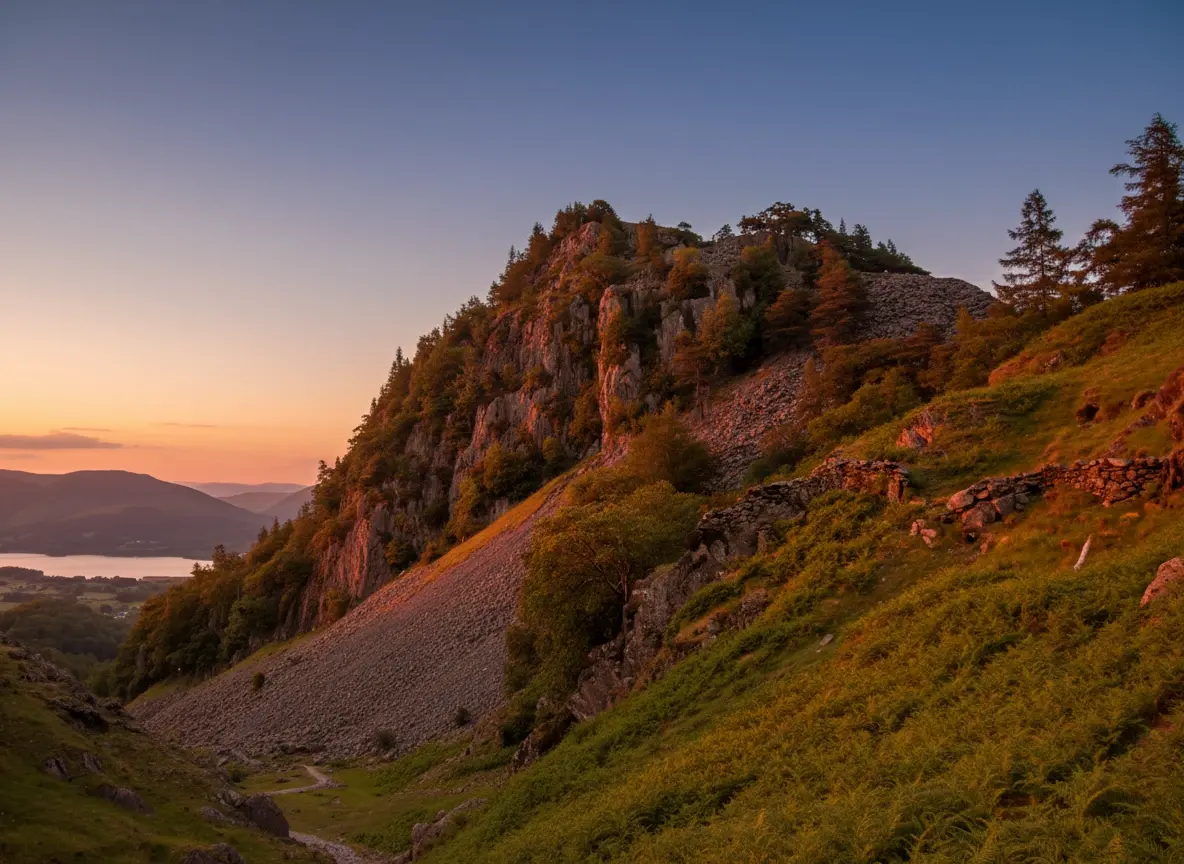
Castle Crag
Wainwright · North Western Fells · 290m · The Smallest Wainwright
A short, steep circular from Rosthwaite to Castle Crag, the smallest Wainwright, with Borrowdale views, slate quarries and a cave. Free GPX and tips.
Route map & downloads
Loading the interactive route map…
Map not included: carry OS Explorer OL4 and a compass.
- Start / parking
- Rosthwaite National Trust Car Park
- Postcode
- CA12 5XB
- Parking
- Pay & display (free for National Trust members)
- Without a car
- The 78 Borrowdale bus from Keswick stops in Rosthwaite.
Step-by-step route
The Castle Crag walk proves that the smallest of the 214 Wainwrights can deliver one of the biggest rewards in the Lake District. At just 290 metres — the only Wainwright under 1,000 feet — this rugged little rock peak rises from the wooded jaws of Borrowdale like a natural fortress, and its summit hands you a view down Derwentwater to Skiddaw that Alfred Wainwright rated among the very finest in the valley. This circular from Rosthwaite is a gem of a half-day: a gentle riverside approach beside the crystal River Derwent through the ancient oakwoods of the Borrowdale temperate rainforest, then a dramatic final climb up a zig-zag path carved through slate spoil heaps, past a cave once lived in by an eccentric 'Professor of Adventure'. The summit itself is a poignant place, given to the nation as a First World War memorial. Small in stature but huge in character, Castle Crag is the perfect low-level fell for a shorter day, for families with older children, or for a memorable finale to any Wainwright round.
Rosthwaite & the River Derwent
From the National Trust car park at Rosthwaite, walk through the pretty hamlet and take the lane and path west towards the river. Cross the River Derwent — here running clear and shallow over pale stones — and turn to follow its wooded bank upstream. This opening stretch is gentle and idyllic, winding through the mossy, lichen-draped oaks of the Borrowdale rainforest, one of England's rare fragments of temperate rainforest. There are pebble beaches and pools along the way, and the great bulk of Castle Crag looms ahead, its quarried flank unmistakable. Follow the clear path as it leads towards the foot of the fell near Low Hows Wood.
Into the Woods & Millican Dalton's Cave
The path leaves the river and begins to climb through woodland on the flank of the crag. As you gain height, look out on the western side for the caves of Millican Dalton — a set of old slate quarry chambers where, in the 1920s and 30s, this self-styled 'Professor of Adventure' spent his summers living wild. You can explore the two-tier cave and find the inscription he carved: 'Don't waste words, jump to conclusions.' It's an atmospheric and slightly eerie spot, and a genuine hidden gem of Borrowdale history. Take care on the loose ground near the workings before returning to the main path.
The Slate Ascent
Now comes the walk's dramatic finale. The path zig-zags steeply up through vast slate spoil heaps — the shattered grey debris of the quarrying that shaped this fell — on a surprisingly stiff climb for such a small hill. The loose slate can be slippery, especially when wet, so take it steadily and follow the engineered path rather than cutting corners. Near the top the route swings up onto the final rocky knoll. It's short-lived effort, but it earns its name: the summit rears up like a keep, and the last few metres feel genuinely mountainous despite the modest height.
The Summit (290m) & Its Memorial
Castle Crag's little summit is one of the most moving tops in the Lakes. It was gifted to the National Trust in 1920 as a memorial to the men of Borrowdale who fell in the First World War, and a plaque set into the rock records the dedication. Despite standing only 290 metres high, the all-round view is superb: north, the length of Derwentwater draws the eye to Keswick and the great whaleback of Skiddaw; south, the rugged fells crowd the head of Borrowdale. Wainwright thought it one of the finest viewpoints in the valley, and few who climb it disagree.
The Descent & Riverside Return
From the summit, descend carefully back down the zig-zag slate path — this is where the loose ground demands most care — and rejoin the woodland trail. Rather than simply retracing every step, you can follow the path down and around to complete a loop back towards the river and the hamlet of Rosthwaite. On the return, the several pebble beaches along the Derwent make an irresistible spot for a paddle or a very bracing wild swim on a warm day, before an easy final stroll back through the fields to the car park.
Route Essentials
- Parking: The National Trust car park at Rosthwaite (CA12 5XB) is the best and most direct start. It's a popular hub for Borrowdale walks, so arrive early. There's an overflow field in peak season, and the Borrowdale bus (78 from Keswick) is a great car-free alternative.
- Don't underestimate it: It may be the smallest Wainwright, but the final slate path is steep and slippery when wet. Sturdy boots with good grip are essential for the loose ground.
- Millican Dalton's cave: The caves are well worth exploring, but the ground around the quarry workings is loose and unfenced — keep children and dogs close and don't venture into unstable tunnels.
- The River Derwent: The riverside has lovely pebble beaches ideal for a picnic or a (very cold) dip. Never swim alone and be aware the river rises fast after heavy rain.
- Facilities: Rosthwaite has the Flock-In tearoom (Yew Tree Farm) and toilets; Grange-in-Borrowdale nearby has a café. Keswick, a short drive north, has full facilities.
- Combine it: Castle Crag pairs well with a stroll to Grange or an onward walk along the Derwent — a perfect low-level day when the high fells are in cloud.
- Safety Notice: The GPX file and route information on this page are for general guidance only. Always carry an OS map and compass, check the weather forecast, and tell someone your plans before setting out. You walk at your own risk.
The Castle Crag walk at a glance
The Castle Crag walk is proof that the smallest hills can leave the biggest impression. At just 290 metres, Castle Crag is the only one of Alfred Wainwright's 214 fells under 1,000 feet — and yet it packs in more character per metre than almost anything else in the Lake District. Rising from the wooded jaws of Borrowdale like a natural fortress, this rugged little rock peak offers a riverside amble through temperate rainforest, an atmospheric quarry cave once home to an eccentric hermit, a dramatic slate-spoil climb, and a poignant war-memorial summit with one of the finest views down Derwentwater in the entire valley.
Starting from Rosthwaite, the circular is a perfect half-day of around 5.8 km (3.6 miles). It suits families with steady older children, walkers seeking a shorter day when cloud sits on the high fells, and Wainwright baggers wanting a memorable, characterful tick. Below you'll find the practical detail — parking, transport, history and refreshment — that turns a good walk into a great one.
Getting to Rosthwaite: parking and the Borrowdale bus
By car, the walk begins at the National Trust car park at Rosthwaite (postcode CA12 5XB), tucked in the heart of Borrowdale a short drive south of Keswick along the B5289. It's a popular hub for Borrowdale walks and fills early on fine days; there's an overflow field in peak season, but arriving before mid-morning is wise. Limited alternative parking exists at Grange-in-Borrowdale, a little further north.
By public transport, Castle Crag is one of the most accessible Wainwrights of all. The 78 Borrowdale bus runs frequently from Keswick through Rosthwaite and on to Seatoller, making a completely car-free day genuinely easy — and letting you enjoy a post-walk pint without worrying about driving the narrow valley road afterwards. From Rosthwaite, follow the lane and path west towards the River Derwent to begin the circuit.
Borrowdale's temperate rainforest: the riverside approach
The walk's gentle opening is a delight in its own right. After crossing the clear, shallow River Derwent, the path follows the wooded bank upstream through the Borrowdale oakwoods — one of England's rare surviving fragments of Atlantic temperate rainforest. These mossy, lichen-draped woods thrive on the valley's high rainfall and clean air, supporting ferns, liverworts and rare plants found in few other places in the country. Pebble beaches and quiet pools line the river, tempting a paddle or, for the hardy, a bracing wild swim on the return.
Ahead, the quarried flank of Castle Crag looms unmistakably, its grey slate scar signalling the industrial history that shaped this fell. The path leads on towards Low Hows Wood at the foot of the crag, where the real climbing begins.
Millican Dalton's cave: the 'Professor of Adventure'
Part-way up the fell's western flank lie the caves of Millican Dalton, a set of old slate-quarry chambers with a wonderful story attached. In the 1920s and 30s, Millican Dalton — a Cumberland-born insurance clerk who abandoned London life to live simply outdoors — spent his summers camping in these caverns, styling himself the "Professor of Adventure" and guiding visitors on climbing and rafting expeditions. He made his own clothes and tents, lived largely off the land, and carved into the rock the phrase walkers still seek out today: "Don't waste words, jump to conclusions."
You can explore the two-tier cave (a torch helps), but take care: the ground around the workings is loose and unfenced, so keep children and dogs close and don't venture into unstable tunnels. It is one of Borrowdale's most atmospheric hidden corners and a genuine highlight of the walk.
The slate ascent and the war-memorial summit
The finale is short but surprisingly stiff. The path zig-zags steeply up through vast slate spoil heaps — the shattered grey debris of centuries of quarrying — on a climb that feels far more mountainous than the modest height suggests. The loose slate can be slippery, especially when wet, so follow the engineered path rather than cutting corners.
The summit is one of the most moving tops in the Lakes. It was gifted to the National Trust in 1920 as a memorial to the men of Borrowdale who fell in the First World War, and a plaque set into the rock records the dedication. The reward is out of all proportion to the effort: north, the length of Derwentwater draws the eye to Keswick and the great whaleback of Skiddaw; south, the rugged fells crowd the head of Borrowdale. Wainwright rated it one of the finest viewpoints in the valley, and few who climb it disagree.
Combining Castle Crag with other Borrowdale walks
Castle Crag's low height makes it the perfect bad-weather Wainwright — a rewarding outing when the higher tops are lost in cloud. It also links naturally into longer Borrowdale days: continue along the Derwent to the pretty hamlet of Grange, extend onto the wider Borrowdale valley paths, or use it as a gentle finale to a bigger round. Nearby Keswick and Derwentwater open up a wealth of further walking, from lakeshore strolls to the high fells of Skiddaw and Blencathra.
If you're working through the fells, browse our full Wainwright walks collection to plan your next summit — Castle Crag is a wonderful, low-stress way to add to the tally. And if waterfalls and gorges appeal, the western valley of Eskdale hides our dramatic Stanley Ghyll Force walk a short drive south.
Where to eat, drink and stay in Borrowdale
Rosthwaite has the welcoming Flock-In tearoom at Yew Tree Farm plus public toilets, while Grange-in-Borrowdale has a well-loved café by the bridge. For a fuller choice of pubs, restaurants, shops and accommodation, Keswick is a short drive north and makes an excellent base for exploring the whole northern Lake District. Borrowdale itself offers characterful inns, campsites and guesthouses for those wanting to wake up beneath the fells.
Castle Crag walk: final tips for a memorable day
Don't underestimate this little fell. Sturdy boots with good grip are essential for the loose slate zig-zags, which become genuinely slippery when wet and can ice up in winter. Take a torch to explore Millican Dalton's cave, keep everyone on the main path around the unfenced quarry workings, and pack a towel if you fancy a cold-water dip in the Derwent on the way back.
Above all, give the summit the time it deserves — read the memorial, drink in the Derwentwater view, and reflect on why Wainwright chose to honour so small a hill. The Castle Crag circular from Rosthwaite proves, better than any other walk in the district, that a great fell is measured in character, not height.
Gallery
Video Guide
What to Bring
- Sturdy boots with good grip (loose slate)
- Waterproof jacket and a warm layer
- Water and a picnic for the riverside or summit
- OS Explorer OL4 map
- Phone with the OS Maps app
- A torch to explore Millican Dalton's cave
- Camera for the Derwentwater panorama
- Towel and footwear for a river dip (optional)
- Dog lead for the farmland and quarry sections
- Sun protection on clear days
Best Time to Visit
Castle Crag is a superb all-year, all-weather walk and a brilliant choice when cloud sits on the higher fells — the summit is low enough to stay clear on many a dull day. Autumn is glorious, with the Borrowdale oakwoods turning gold and the light low over Derwentwater. Spring brings fresh green and quieter paths, while warm summer days tempt walkers into the river pools on the return. Even in winter it's a rewarding short outing, though the slate zig-zags can be icy — take extra care on the steep descent.
Local Weather (yr.no)

Forecast provided by yr.no
Mountain forecasts
Summit conditions can be far colder, windier and cloudier than the valley. Check a specialist mountain forecast before you set out:
Safety Information
Important: The GPX file and route description on this page are for general guidance only and should not be relied upon as a sole means of navigation. GPX tracks are approximate and may not reflect current ground conditions, path diversions, or seasonal changes.
Always carry an Ordnance Survey map and a compass, and know how to use them. Check the weather forecast before setting out, tell someone your planned route and expected return time, and wear appropriate footwear and clothing for the conditions. In an emergency dial 999, ask for the Police, then Mountain Rescue. Read our fell safety guide before your first walk.
UKLakeDistrict.com accepts no responsibility for any loss, injury, or damage arising from the use of route information or GPX files provided on this site. You walk entirely at your own risk.
Beyond the Summit: Exploring Borrowdale Around Castle Crag
The Jaws of Borrowdale and the story in the rocks
Castle Crag guards the narrowest point of the valley, a pinch known as the Jaws of Borrowdale, where the fells close in on the River Derwent between Castle Crag and the slopes of Grange Fell. The rocks here belong to the Borrowdale Volcanic Group — tough, ancient lavas and ashes erupted around 450 million years ago — and it's their resistance to erosion that gives the central Lakes its rugged, knobbly character.
During the last Ice Age, glaciers flowing north from the high fells squeezed through this gap, scouring the valley and leaving Castle Crag standing proud as a resistant knuckle of rock. The fell's name is thought to come from an ancient hill fort on the summit, and it's easy to see why it was chosen: steep on almost every side, with a commanding view up and down the dale.
Nearby: the Bowder Stone
Just across the valley, a short walk or drive from Rosthwaite, sits the Bowder Stone — a colossal boulder of around 2,000 tonnes balanced improbably on one edge. Whether it tumbled from the crags above or was dropped by retreating ice is still debated. The Georgian eccentric Joseph Pocklington, who also built follies on Derwentwater, erected a ladder to its top in the 1790s so visitors could climb it, and a ladder is still there today. It makes a fun ten-minute diversion for families, and there's a National Trust car park nearby on the B5289.
More short walks in Borrowdale
Borrowdale is packed with low-level walks that pair beautifully with Castle Crag, especially on days when cloud sits on the high tops:
- Watendlath — climb the old packhorse path from Rosthwaite to this tiny hamlet and its tarn, hidden in a hanging valley. It was the setting for Hugh Walpole's novel Judith Paris.
- Grange and the Derwentwater shore — follow the river north from Grange to the lake, where boardwalks lead through wet woodland towards the Lodore Falls and the Keswick launch jetties.
- Seathwaite and the Borrowdale Yews — at the head of the valley lies Seathwaite, famously one of the wettest inhabited places in England, and the ancient yew trees celebrated by Wordsworth. It's also the start of the Borrowdale route up Scafell Pike.
- Honister Slate Mine — at the top of Honister Pass, England's last working slate mine offers underground tours and a via ferrata for thrill-seekers.
Castle Crag and the Wainwright round
Castle Crag appears in Alfred Wainwright's Book Six: The North Western Fells, and it's a favourite with baggers precisely because it breaks the rules — it's the only one of the 214 under 1,000 feet. Many people save it for a rest day or a wet-weather outing, and some deliberately make it the final summit of their round so they can finish with a short climb and a riverside walk to the pub.
If you're collecting low but characterful Wainwrights, Black Crag above Tarn Hows is another brilliant short day, while the Old Man of Coniston is a step up to a proper mountain. See every fell we've covered on our Wainwright walks hub, or browse the full list of Lake District walks.
Photographing Castle Crag and Derwentwater
The summit view north along Derwentwater to Skiddaw is best in the morning, when the sun is behind you and lights the lake and the fells beyond. Autumn is the stand-out season: the Borrowdale oaks and birches turn copper and gold, and mist often lingers in the valley bottom on cold, still mornings, leaving the summit above a sea of cloud. For a classic shot of the crag itself, look back from the riverside path near Rosthwaite, where the quarried profile rises above the trees like a ruined castle.
Guide last updated .
Frequently Asked Questions
Where do you park for Castle Crag?
The best place to park is the National Trust car park at Rosthwaite (CA12 5XB) in the heart of Borrowdale, a short, direct start for the circular walk across the River Derwent. It's free for NT members and fills early on fine days. If it's full, there's limited parking at Grange-in-Borrowdale, or take the 78 Borrowdale bus from Keswick for a car-free day.
How long does it take to walk Castle Crag?
The circular walk from Rosthwaite takes most people 2.5 to 3.5 hours, covering around 5.8 km (3.6 miles) with 254 m of ascent. Although it's the smallest Wainwright, the steep slate climb near the top is slower going than the distance suggests. Allow extra time to explore Millican Dalton's cave and to linger by the river on the way back.
Why is Castle Crag the smallest Wainwright?
At just 290 metres (951 feet), Castle Crag is the only one of Alfred Wainwright's 214 fells that stands under 1,000 feet, making it the lowest on the list. Wainwright included it not for its height but for its outstanding character and its remarkable summit view down Derwentwater — proof that a great fell isn't measured in metres alone.
What is the cave on Castle Crag?
It's an old slate-quarry chamber known as Millican Dalton's cave, on the western flank of the fell. In the 1920s and 30s the eccentric Millican Dalton — a self-styled 'Professor of Adventure' who left London to live simply outdoors — spent his summers here, guiding visitors and camping in the cavern. You can explore the two-tier cave and find his carved inscription, making it one of Borrowdale's most characterful hidden gems.
Is Castle Crag suitable for children?
Yes, it's a great little adventure for families with reasonably steady older children, thanks to the short distance, the exciting cave and the river beaches. The one thing to watch is the steep, loose slate path near the summit and the unfenced ground around the quarry workings — hold younger children's hands on these sections and keep everyone on the main path.
What are the views like from the top of Castle Crag?
Superb, and far bigger than the 290-metre height suggests. The summit looks north down the whole length of Derwentwater to Keswick and the mighty Skiddaw, and south into the rugged heart of Borrowdale. Alfred Wainwright rated it one of the finest viewpoints in the valley, and its isolated, fortress-like position gives an uninterrupted panorama in every direction.
Is Castle Crag dog friendly?
Yes — it's a popular walk for dogs, with a lovely riverside section they'll enjoy. Keep your dog under close control or on a lead through the Rosthwaite farmland (livestock graze the fields) and near the loose ground around the quarry workings and cave. The steep slate path is manageable for most dogs; the river offers plenty of fresh water on a warm day.
Which map covers the Castle Crag walk?
The walk is covered by OS Explorer OL4 (The English Lakes — North Western area), which shows Borrowdale, Rosthwaite and Derwentwater in detail. You can also download the free GPX file from this page for your GPS device or phone app, and follow the interactive route map above. As always on the fells, carry the paper map and a compass as your primary navigation.
Nearby walks
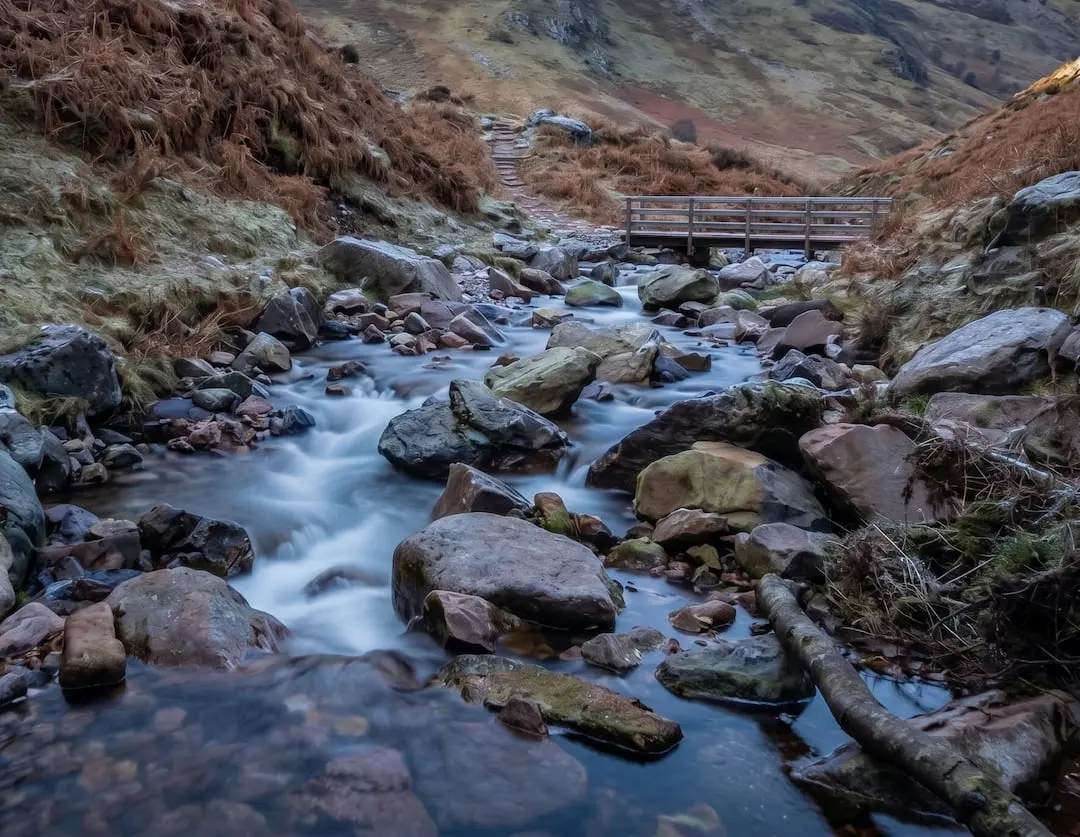
Scale Force
Walk to Scale Force, the Lake District's tallest waterfall. Our Buttermere circular guide covers the full route with free GPX download and parking info.
Read guide: Scale Force →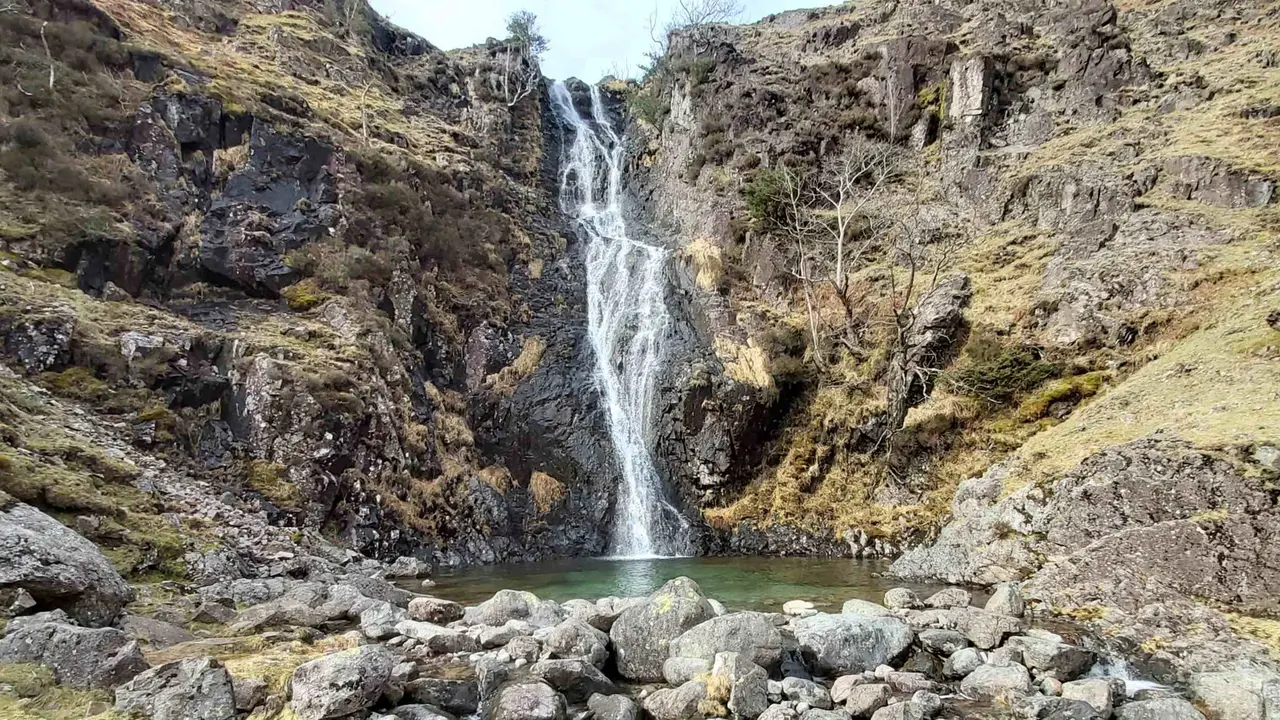
Whorneyside Force
A quiet route from the Old Dungeon Ghyll up Oxendale to a hidden Langdale waterfall, ending at a legendary hikers' pub. Free GPX, parking and tips.
Read guide: Whorneyside Force →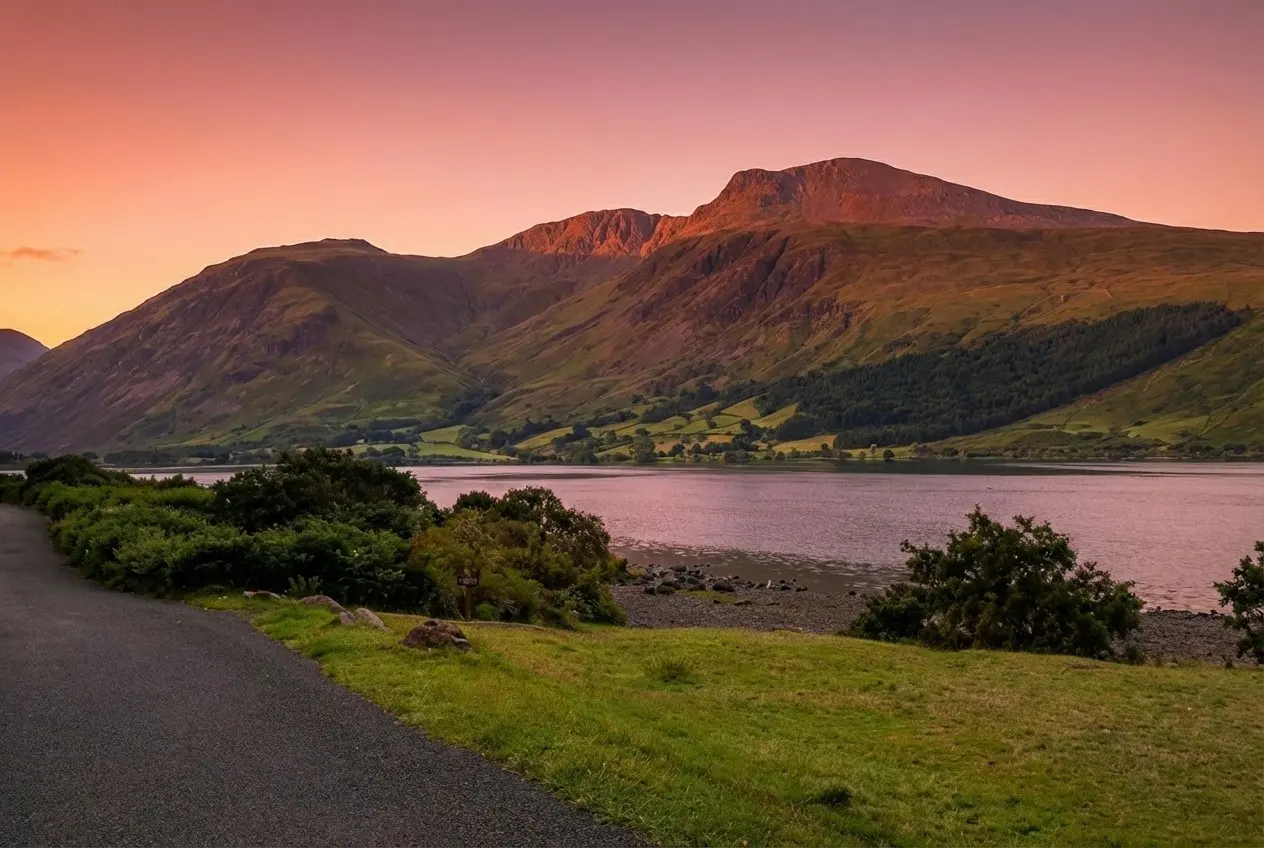
Scafell Pike from Wasdale
The shortest route to England's highest summit: our Scafell Pike walk from Wasdale Head, with free GPX, parking, the Brown Tongue climb and safety tips.
Read guide: Scafell Pike from Wasdale →
Rydal Caves
An easy circular walk from White Moss through woodland and along Rydal Water to a vast slate cavern with stepping stones. Free GPX, parking and tips.
Read guide: Rydal Caves →More walks in Keswick & Borrowdale →
Similar walks elsewhere
Tarn Hows & Tom Gill
A short Coniston circular via the Tom Gill waterfalls to Tarn Hows, with an OS map, free GPX download and honest parking and accessibility info.
Read guide: Tarn Hows & Tom Gill →
Black Crag & Tarn Hows
A circular walk linking the Tom Gill waterfalls, Tarn Hows and the Wainwright summit of Black Crag above Coniston. Free GPX, parking and timings.
Read guide: Black Crag & Tarn Hows →
Aira Force & Gowbarrow
Discover the 65ft Aira Force waterfall and the full Gowbarrow Park circular walk, with interactive OS maps, free GPX downloads and parking info.
Read guide: Aira Force & Gowbarrow →