 UKLakeDistrict
Lake District walks
Winter walks in the Lake District
The best Lake District winter walks: low-level lakes, waterfalls and small fells that fit short daylight, with honest advice on ice, snow and parking.
Short answer: the best winter walks in the Lake District stay low: lakeshores, waterfalls, woods and small fells under about 500 m, on clear paths you can finish in 1.5 to 3 hours. They fit the short daylight of December and January, they're at their best after rain, and you can enjoy them in conditions that make the high fells dangerous for anyone without winter skills and kit.
Every walk below is graded easy or moderate, is between 2.7 and 6.9 km, and tops out well below the snowline most winters. Several start from a bus stop or station, which helps over Christmas and New Year when car parks fill fast on fine days.
How we chose these walks
- Low level: nothing higher than Gowbarrow's 481 m, and most stay far lower.
- Short: 2.7 to 6.9 km and 45 minutes to about 3 hours, so you can start late and finish in daylight.
- Clear paths: well-used routes that are easy to follow when the light goes flat.
- Worth it in winter: a waterfall in spate, a bare-tree view of a lake, or a low sun over Morecambe Bay.
- Escape options: short enough to turn back easily if the weather or the ground underfoot turns.
Winter walks (8)

Gummer's How
In winter: About an hour, so it fits the shortest days. The stone steps can ice over: take care, or carry microspikes in a hard frost.
Read guide: Gummer's How →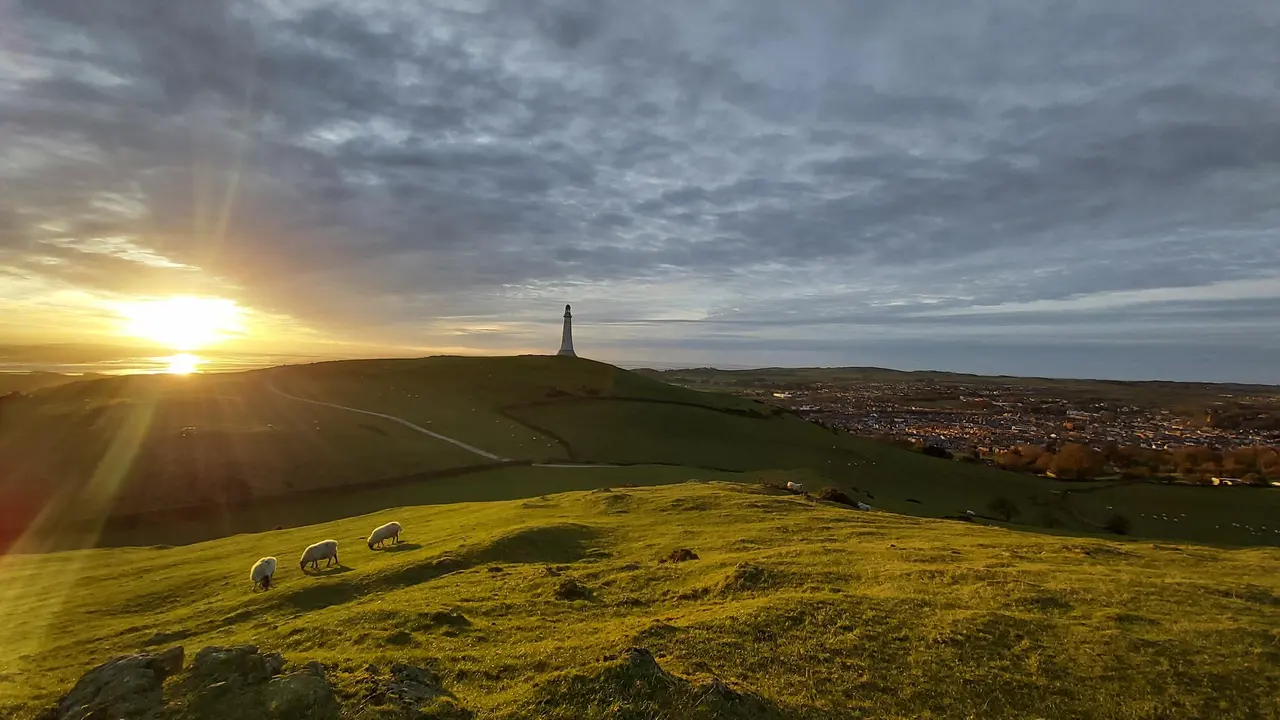
Hoad Hill
In winter: Low sun over Morecambe Bay makes winter one of the best times here; the grassy tracks get muddy, so wear boots.
Read guide: Hoad Hill →
Rydal Caves
In winter: Stays low beside Rydal Water, and the cave is a sheltered spot for a flask. The 555 bus runs past White Moss all year.
Read guide: Rydal Caves →
Stanley Ghyll Force
In winter: A deep, sheltered wooded gorge that's at its finest in spate. Check La'al Ratty's winter timetable if you're coming by train.
Read guide: Stanley Ghyll Force →
High Sweden Bridge
In winter: Straight from Ambleside, with cafés and pubs to warm up in afterwards and a bus home.
Read guide: High Sweden Bridge →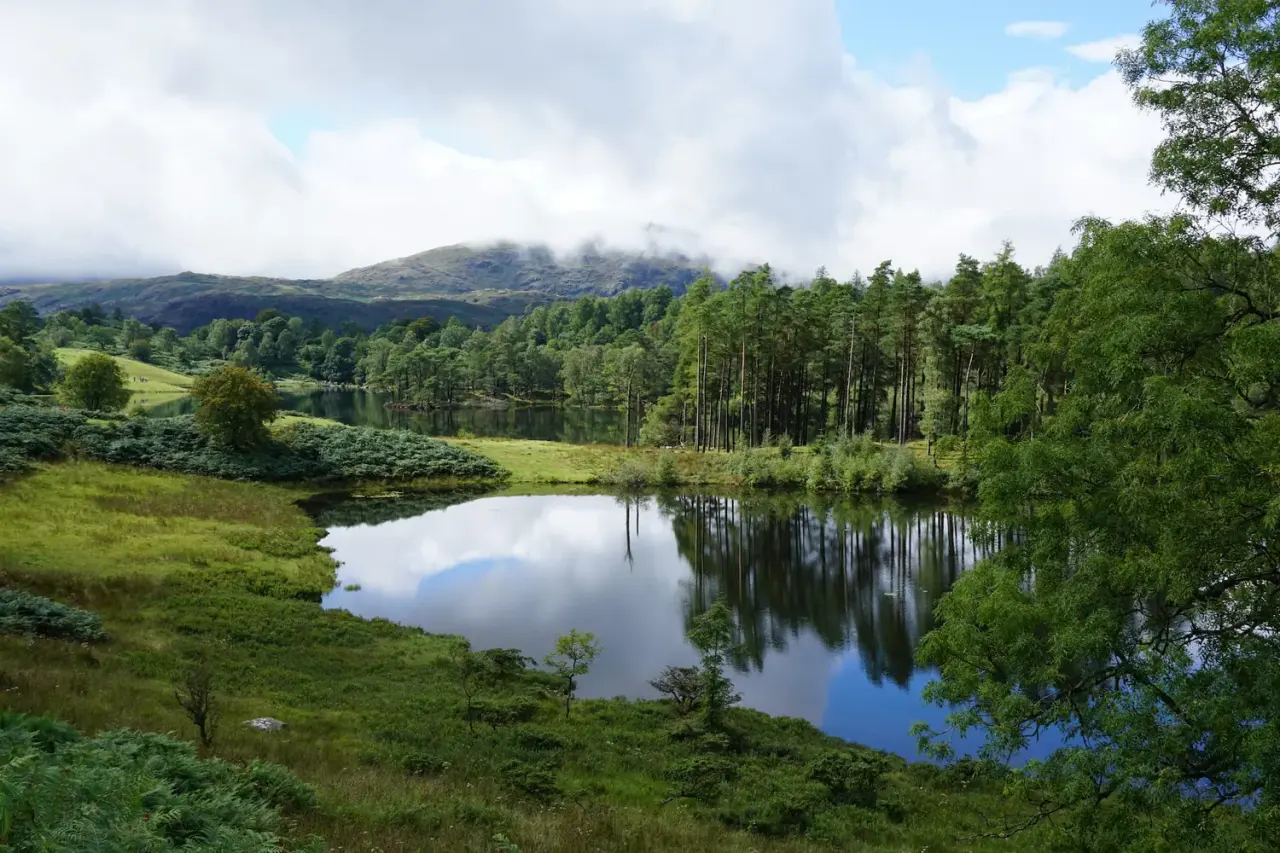
Tarn Hows & Tom Gill
In winter: Tom Gill's falls are at their best after winter rain, and Tarn Hows looks superb under frost or a light dusting of snow.
Read guide: Tarn Hows & Tom Gill →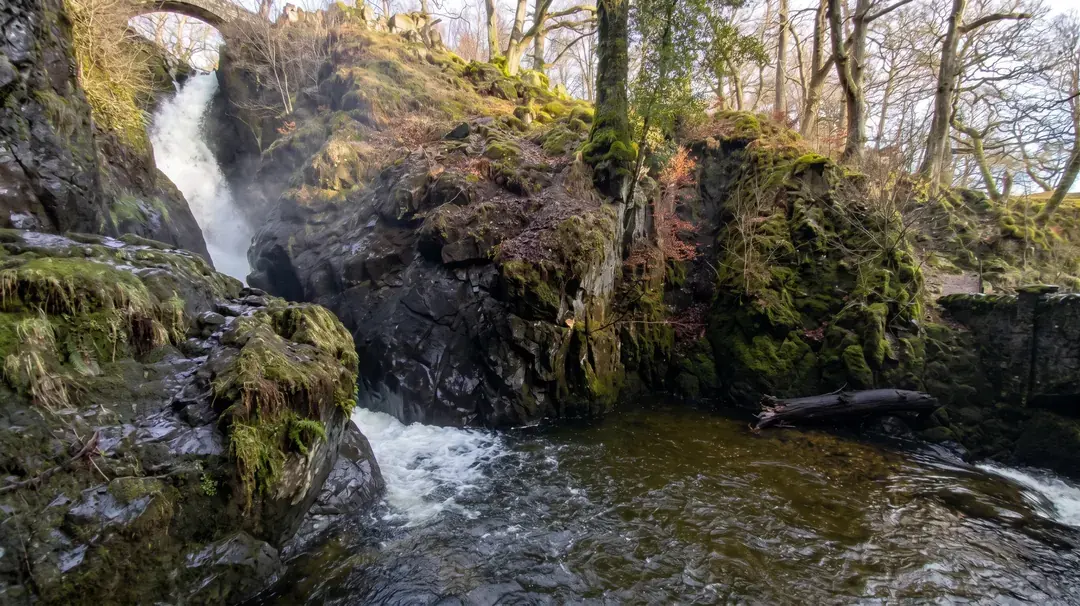
Aira Force & Gowbarrow
In winter: Aira Force thunders in winter. In ice or snow, walk the waterfall paths and skip the climb over Gowbarrow.
Read guide: Aira Force & Gowbarrow →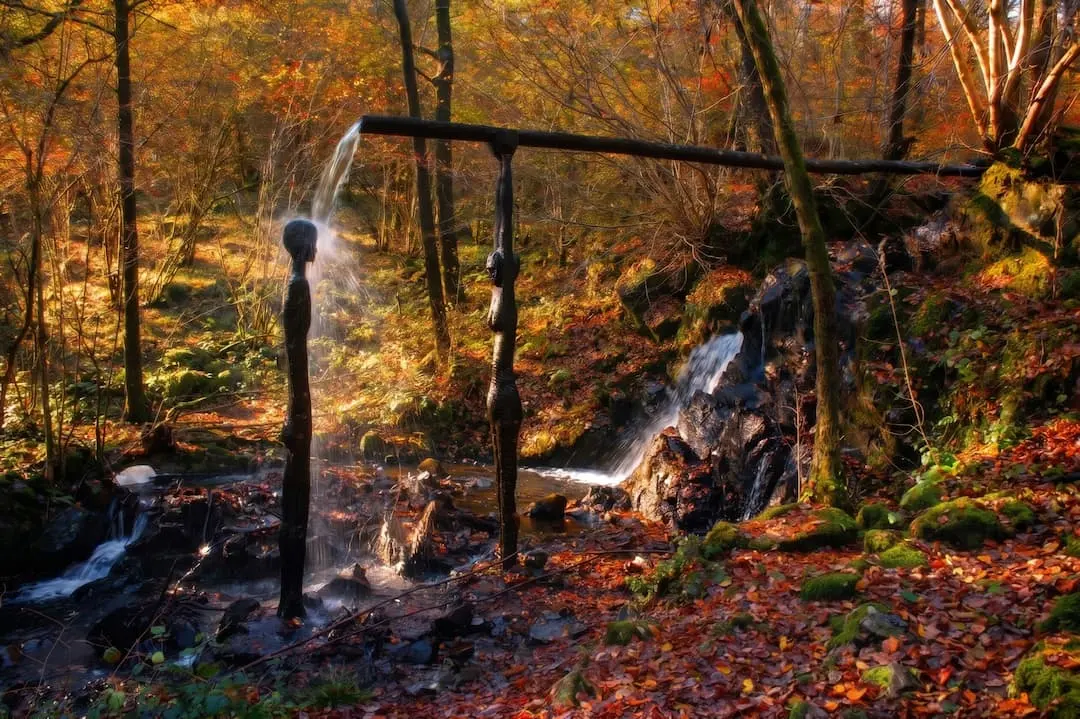
Force Falls, Grizedale
In winter: A forest walk out of the worst of the wind, passing close to a pub in Satterthwaite.
Read guide: Force Falls, Grizedale →Waterfall walks after rain
Winter is waterfall season. After a wet spell, Aira Force, Stanley Ghyll and the falls on Tom Gill are far more dramatic than in summer, and the bare trees open up views you can't see in leaf. Stay on the paths and behind the fences: rocks near falls are slippery all year and can be icy in winter. See our waterfall walks and rainy day walks for more.
Short walks for short daylight
The Lake District gets only about seven hours of daylight around the shortest day. Approximate sunset times for the central Lakes:
| Month | Sunset (approx.) |
|---|---|
| Early November | 4:25pm |
| Mid-December (earliest) | 3:35pm |
| Early January | 3:50pm |
| Early February | 4:45pm |
| Early March | 5:45pm |
Plan to finish at least an hour before sunset, because it gets dark quickly in woods and valleys, and always carry a head torch. If a walk's time range is 2 to 3 hours, start by about noon in December.
Winter safety on the fells
In winter the high fells are a different place. Snow and ice can sit on the tops from November to April, and paths that are easy in summer, such as Helvellyn's Striding Edge, Blencathra's Sharp Edge or the summit of Scafell Pike, need an ice axe, crampons and the skills to use them. Before any fell walk, check the Lake District National Park's Weatherline fell-top conditions report and the Mountain Weather Information Service (MWIS) forecast. If either mentions snow, ice or gales on the tops, choose one of the low-level walks on this page instead. Even at low level, carry a warm layer, hat, gloves, waterproofs, a head torch and a charged phone. Our fell safety guide covers what to take and how to call Mountain Rescue. Every route GPX on this site is a guide only: carry the OS map and check conditions on the day.
Car-free winter walks
Car parks fill fast on fine days over Christmas and New Year, and some high or remote roads can be icy. Rydal Caves and High Sweden Bridge are both on the 555 bus route, and Hoad Hill starts a short walk from Ulverston station. Winter bus, boat and heritage-railway timetables are often reduced, so check before you travel. See our car-free walks and getting around without a car.
Where to warm up afterwards
Part of the joy of a winter walk is the café or pub at the end. Ambleside, at the end of the High Sweden Bridge walk, and Ulverston, at the start of Hoad Hill, have plenty of both. Aira Force has a National Trust tearoom by the car park, there's a café at Dalegarth station for Stanley Ghyll, and the Grizedale walk passes close to a pub in Satterthwaite. Many places cut their winter hours or close for a few days around Christmas, so check before you rely on one.
Frequently Asked Questions
Is it safe to walk in the Lake District in winter?
Yes, at low level with the right kit and a sensible plan. Lakeshore, woodland and waterfall walks like Rydal Caves and Tarn Hows are enjoyable all winter. The high fells are another matter: in snow and ice they need an ice axe, crampons and winter skills. Check Weatherline and MWIS before any fell walk.
Which Lake District fells should I avoid in snow?
Without winter mountaineering skills and kit, avoid the high fells and especially the ridges and steep ground, such as Helvellyn's Striding and Swirral Edges, Blencathra's Sharp Edge and the Scafell Pike massif. Cornices, ice and poor visibility make these dangerous. Choose a low-level walk from this page instead.
Are Lake District car parks open in winter?
Most are open all year. Roads to some starts can be icy or closed after snow, such as the steep lane up to Gummer's How or the Hardknott and Wrynose passes into Eskdale. On fine days over Christmas and New Year popular car parks still fill, so arrive early or use the bus.
What is a good Boxing Day or New Year's Day walk in the Lake District?
Something short with a view and a warm finish: Gummer's How takes about an hour for a Windermere panorama, Hoad Hill starts and ends in Ulverston, and Rydal Caves is easy to reach by bus. Check bus timetables, which change over the holidays.
What should I take on a winter walk in the Lake District?
Waterproof jacket and trousers, warm layers, hat and gloves, boots with a good grip, a head torch, food and a hot drink, a charged phone and a map. In a hard frost, lightweight microspikes help on icy paths and stone steps.